Scalping bots
High-frequency bots that harvest tiny, repeated edges on liquid markets.
norm1e69
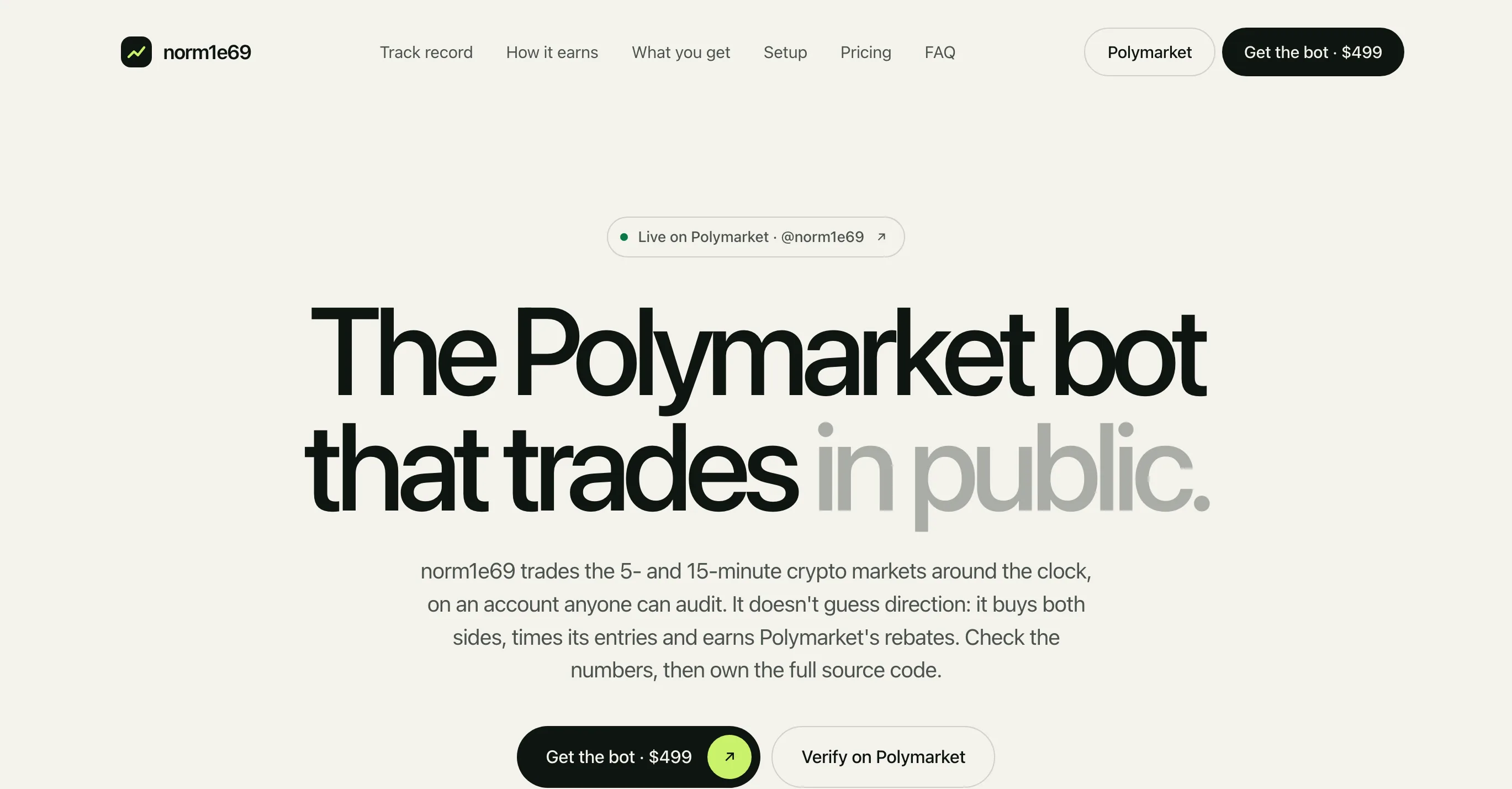
Self-hosted Python bot for Polymarket's 5- and 15-minute crypto Up or Down windows, sold as full source for a single payment and named after the public Polymarket account its seller points to as proof. It does not predict direction: it buys both Up and Down through each window on Bitcoin, Ethereum and Solana, mostly at the ask, holds every position to settlement and redeems the winnings. By the vendor's own breakdown the timing of those buys roughly pays the taker fee, and more than half of the net comes from Polymarket's fee rebates at a high volume tier. Paper mode, a daily loss limit, an exposure cap and Telegram reports are built in.
PolySigma
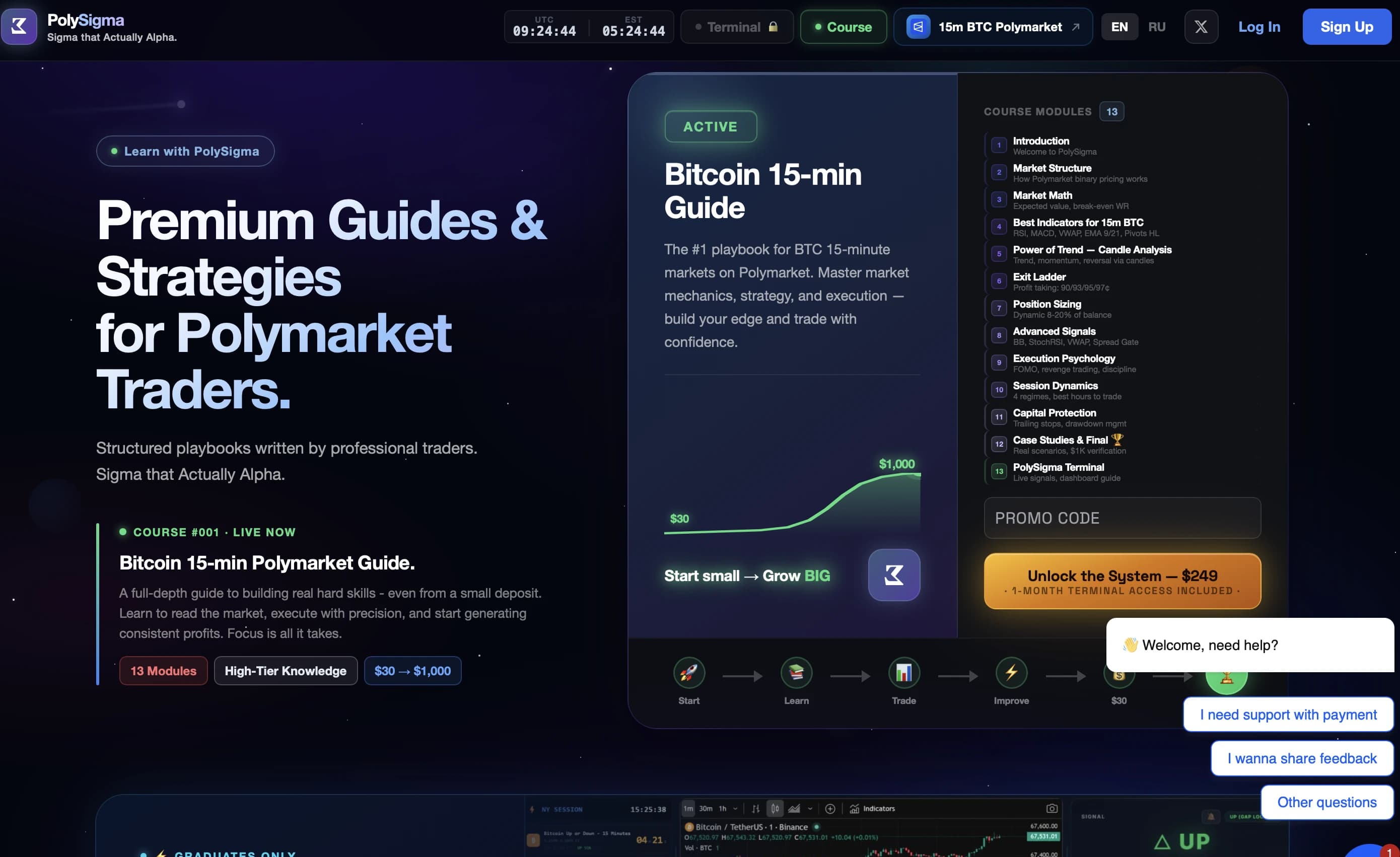
Premium strategy course and live signals terminal for Polymarket's BTC 15-minute markets. A 13-module playbook covers market structure, indicators (RSI, MACD, VWAP, EMA), position sizing, exit ladders and trading psychology; graduates unlock the Prediction Terminal — a live quantitative system that surfaces edge in real time.
PolySnipe
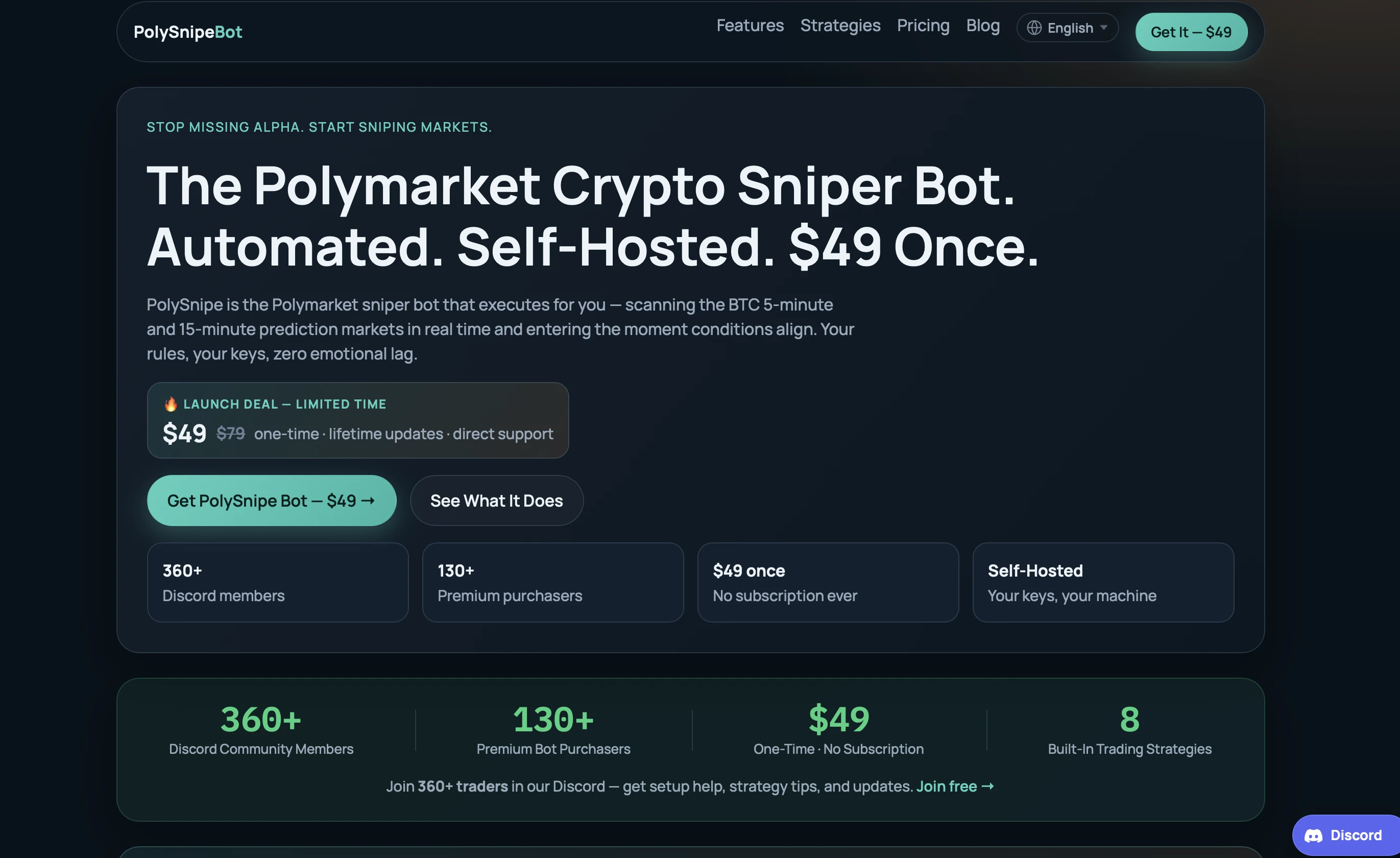
Automated, self-hosted sniper bot for Polymarket's BTC 5- and 15-minute up/down markets. Scans in real time and enters in milliseconds the moment multiple independent signals align. Ships 8 configurable strategies, a setup wizard, backtesting and a full trade journal — full source code, one-time $49.
Polymarket Bot Skill
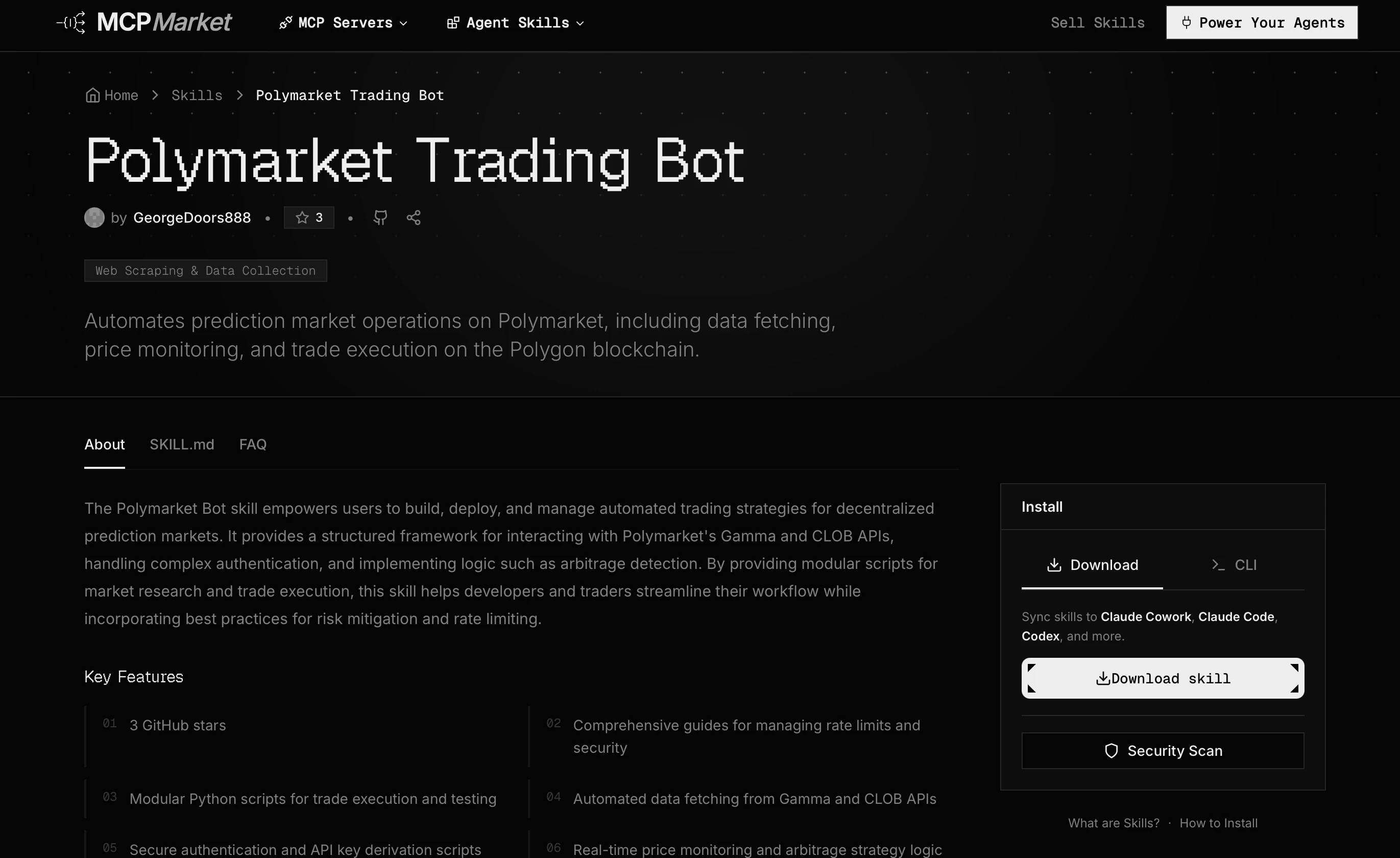
Claude Code skill that turns an AI coding agent into a Polymarket bot builder. Ships modular Python scripts for the Gamma and CLOB APIs — market research, price monitoring, arbitrage detection and trade execution — with built-in auth, key derivation and rate-limit handling. Installs into Claude Code, Cowork, Codex and other agents.
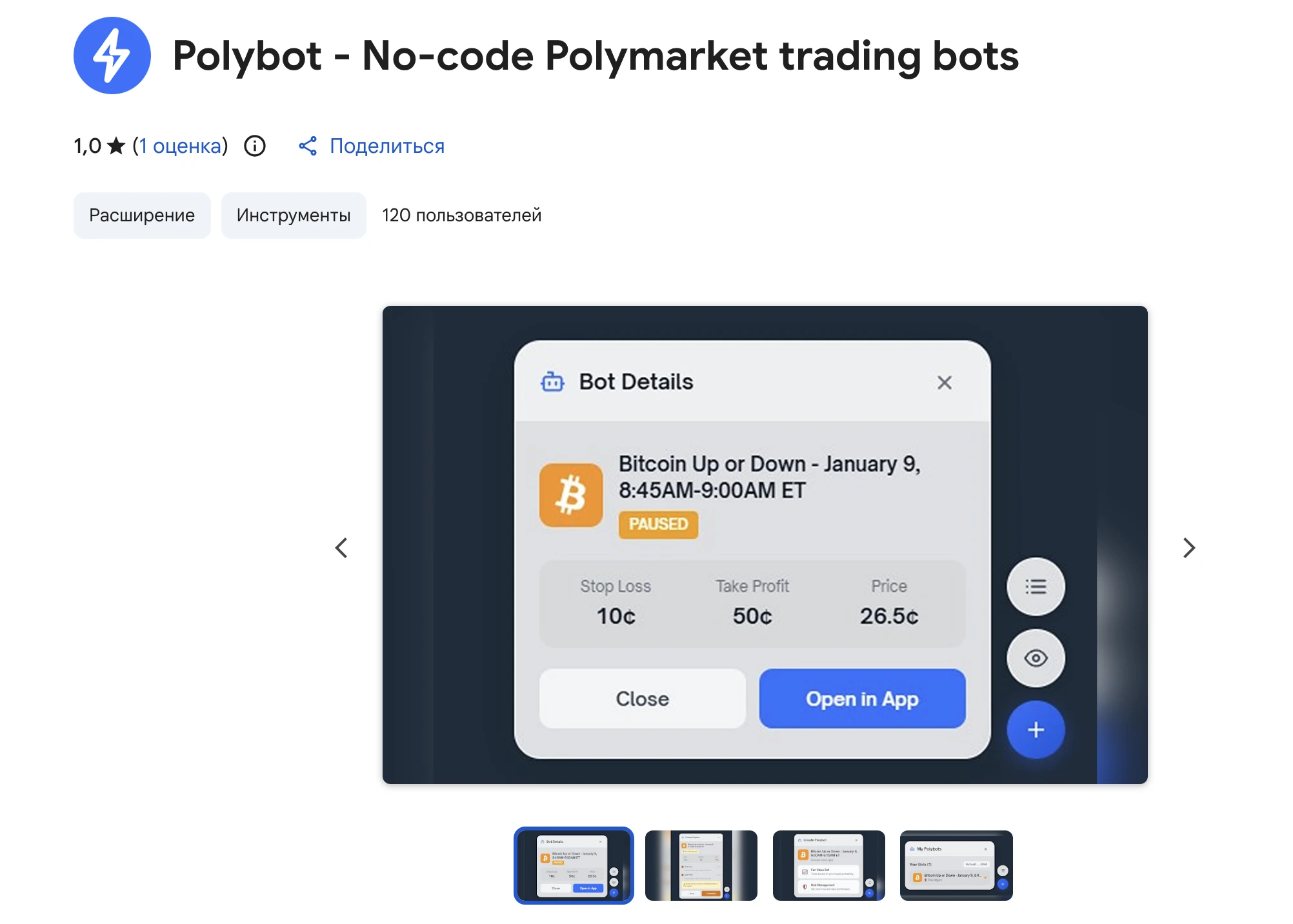
Polybot (No-Code)
No-code Chrome extension for building automated Polymarket trading bots right in your browser. Spin up a bot from any event page with one click, add stop-loss and take-profit orders, or run the Fair Value market-making bot with a configurable target probability — no coding required.
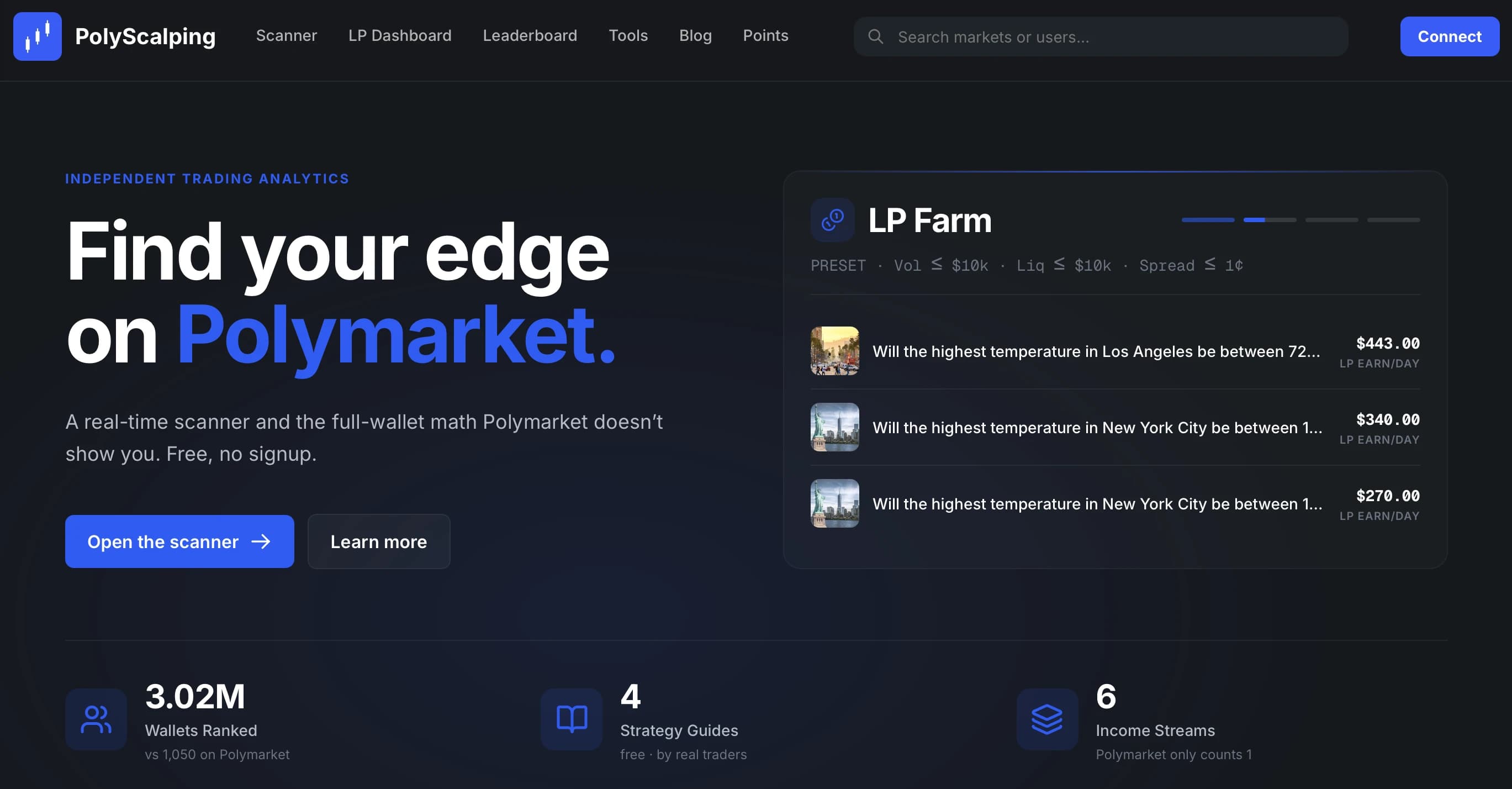
PolyScalping
Real-time scanner and reward analytics for Polymarket. Surfaces scalping opportunities as they appear and shows the full-wallet math Polymarket hides — tracking LP rewards, maker rebates, referral rewards and yield payouts, with leaderboards and an LP dashboard.
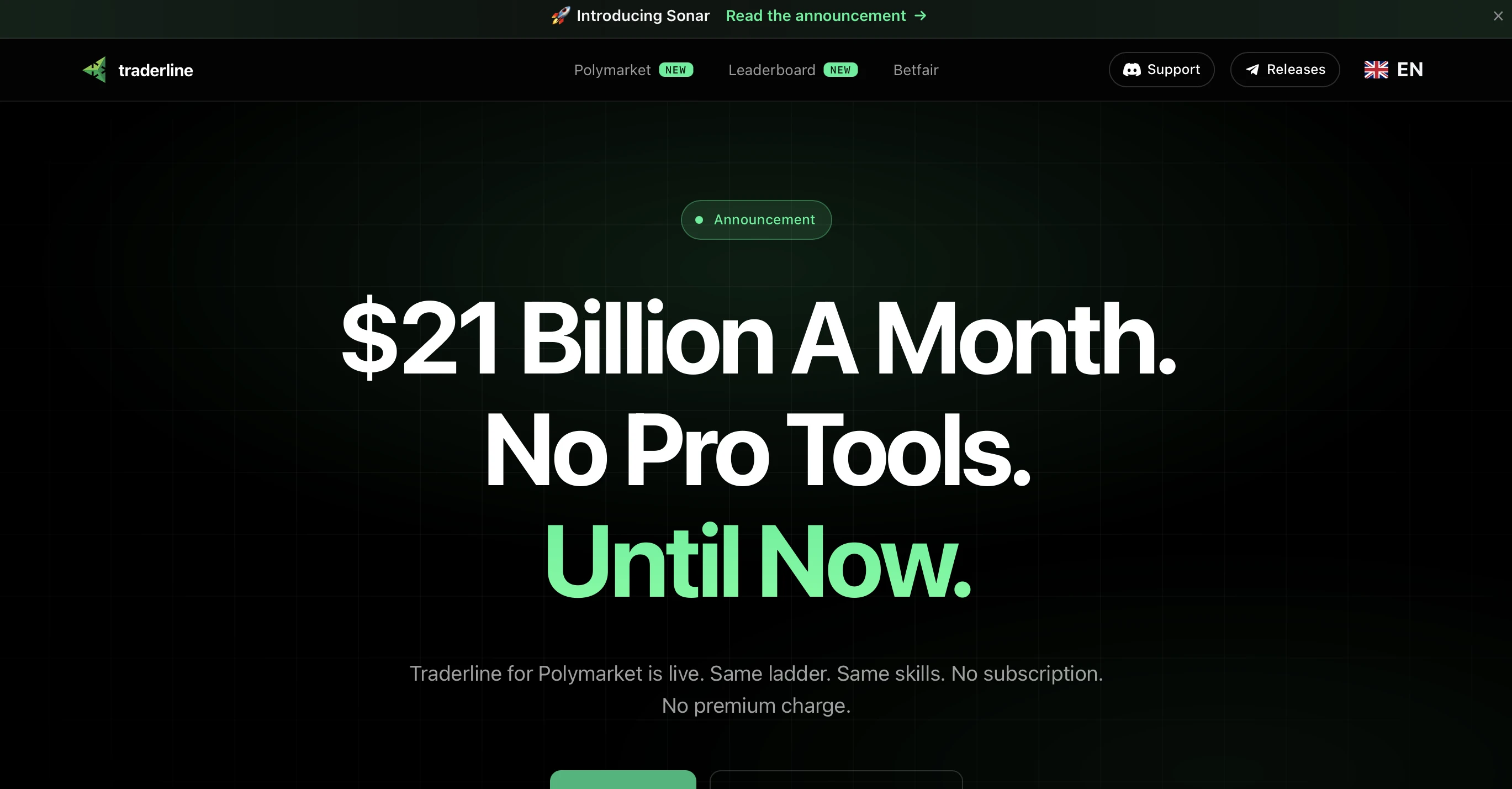
Traderline
Professional trading software for prediction markets and betting exchanges. A pro-grade ladder interface with fast execution, a NET button for scalping and on-chain 'Sonar' — covering Polymarket and Betfair, free with no subscription. Used by 150,000+ traders across 20+ countries.
How scalping bots work on Polymarket
Scalping bots harvest small, repeated edges on liquid markets: enter on a short-term dislocation, exit a few cents later, never hold to resolution. A single trade means little — the strategy is dozens or hundreds of trades a day, each with a slight statistical tilt.
They live inside the order book's microstructure, reading imbalance and short-term flow on Polymarket's most liquid markets — major political books, big games, the recurring crypto windows. Liquidity is the habitat: a thin book costs more in slippage than the edge is worth.
What to look for in a scalping bot
Do the fee math first: an average 2-cent win doesn't survive fees and slippage unless the win rate genuinely clears break-even, so check whether published stats already include costs. Then look at exit discipline — fixed take-profit and stop levels, and an explicit rule for when a scalp fails. The classic way scalping bots die is quietly becoming hold-to-resolution bots the moment a trade goes against them.
Frequently asked questions
- How is scalping different from market making?
- Scalpers take liquidity when a directional micro-signal fires; makers post quotes and get paid passively for the spread. Scalping needs less capital and no rewards-program knowledge, but pays the spread instead of earning it.
- How many trades does a scalping bot make?
- Dozens to hundreds per day on active markets. At that frequency performance is pure statistics — judge a scalper on weeks of aggregate numbers, never on a screenshot of one good day.
- Which markets can actually be scalped?
- Only liquid ones: top political markets, major sports during games, and the 5- and 15-minute crypto windows. On everything else the spread and slippage are wider than any micro-edge.
Guides to scalping
All guidesMarket making on Polymarket: spreads, rebates, liquidity rewards and the inventory risk nobody mentions
How a market-making bot quotes both sides of a Polymarket book and gets paid three ways — the spread, maker rebates on takers' fees, and the liquidity rewards program — and the inventory risk that eats all three: adverse selection, resolution, and the trader who knows more than your bot.
4 minAug 21, 2026Polymarket's 5- and 15-minute Bitcoin markets: how the bots trade them, and the fee that decides everything
The 'BTC up or down in the next five minutes' markets repeat hundreds of times a day, which is why they are the most bot-traded books on Polymarket. How the momentum, spot-lead and maker bots work, why the 1.75% taker fee at 50 cents is the whole story, what the published records actually show, and what to check in a minute-market bot.
4 minAug 21, 2026