On this page6 sections
Four different things called "a Telegram bot"
The Telegram category looks like one thing and is four, and they differ most in the only dimension that matters — what they hold of yours.
| Kind | What it does | What it holds | Typical risk |
|---|---|---|---|
| Alerts | Pushes price moves, new markets, resolution, volume spikes into a chat | Nothing | Noise; false urgency |
| Wallet trackers | Tells you when chosen wallets or "whales" trade | Nothing | Copying a wash-trader |
| Trading bots | Lets you buy and sell from the chat — buttons, slippage settings, positions | A key that can sign for a wallet | The operator, and their security |
| Copy bots | Mirrors wallets automatically, from the chat | A key, plus standing permission to trade | Everything above, unattended |
The first two are information products. You can use them freely, with the usual scepticism about what they choose to alert you to. The last two are where money moves, and they deserve the rest of this guide.
How a Telegram trading bot works underneath
There is no "Telegram trading"; there is a server somewhere that talks to Polymarket's order book with credentials, and Telegram is the remote control. When you tap Buy, the bot's server builds and signs an order with a key it holds, submits it to the CLOB, and reports back. The signing key is either one the bot generated for you (you deposited into a wallet it controls — custodial, whatever the landing page says) or, in the better designs, credentials you created for a wallet you control and handed over.
That second design is the least bad. The key still lives on someone else's server and can sign anything that wallet can; what you control is how much that wallet holds. The practical rule: a Telegram trading bot gets a wallet funded with what you are actively trading, refilled as needed, and never your main stack. Keys and wallets covers credentials, proxies and revocation in detail.
Clones: the most common way people lose money here
Telegram usernames are not verified, avatars are copied in seconds, and a bot that messages you first looks exactly like a bot you searched for. The pattern:
- A clone registers a handle one character from the real one, or a "v2" / "official" variant.
- It copies the welcome flow. It may even proxy the real bot's replies for a while.
- It asks for a seed phrase "to connect your wallet", or gives a deposit address.
- It is gone by the time you notice.
The defence is procedural, not technical: start only from the link on the project's official website or verified X account — never from a search, a group invite or an unsolicited message; check the handle character by character; and never, for any bot, paste a seed phrase. No legitimate Polymarket tool needs one. Every listing in the Telegram category repeats this because it keeps happening.
What is worth using Telegram for
Alerts you would otherwise miss. New markets in a category you trade, a market crossing a price, a resolution, a volume spike — this is what Telegram is good at and what a tracker like PolySpy or Polymarket Insider Bot sells. No custody, instant, and you decide.
Watching specific wallets. If you have done the work of picking wallets (see the copy-trading guide for how), a tracker that pings you on their fills is the manual, lower-risk version of a copy bot.
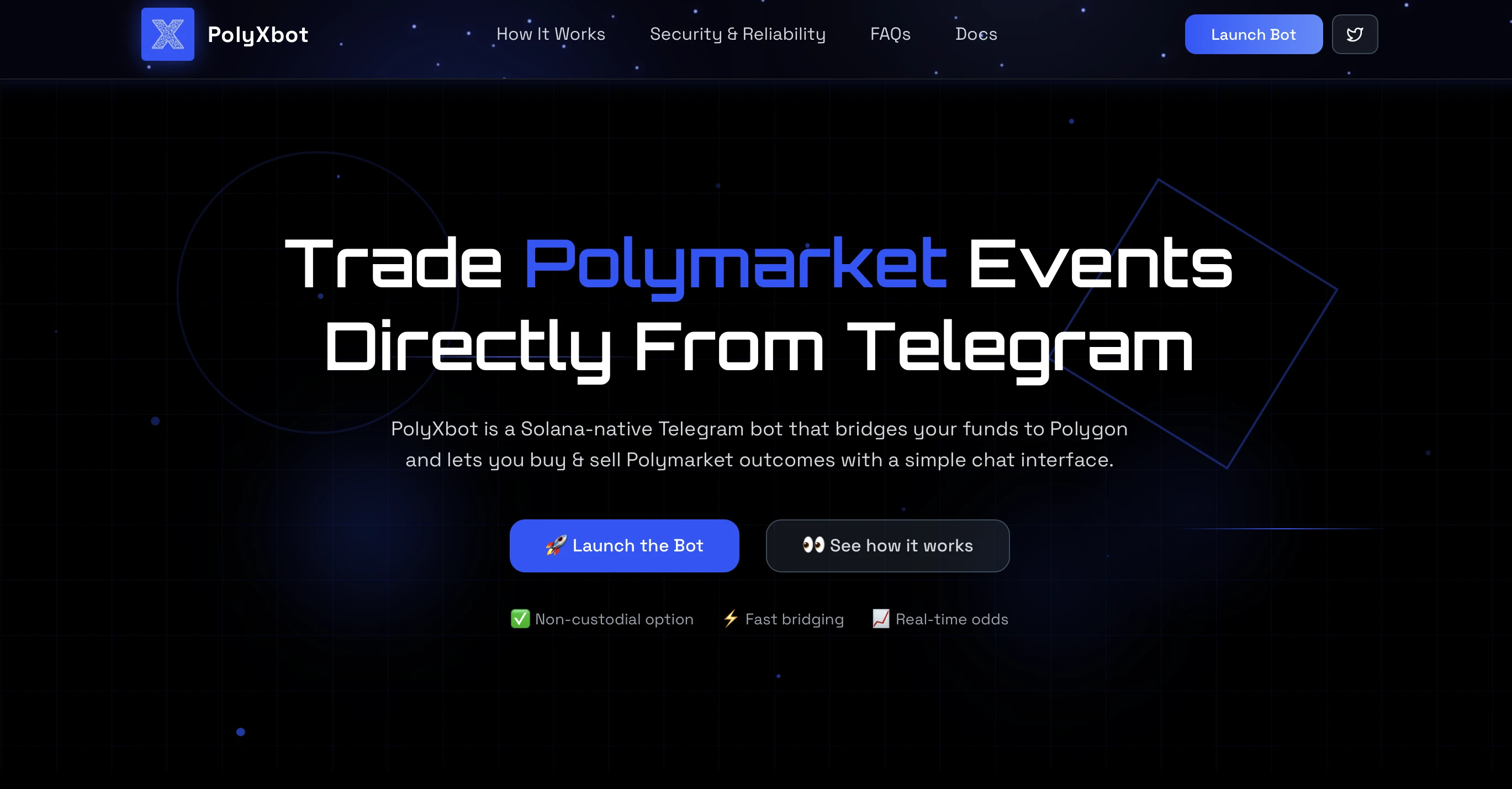
Fast execution when you have decided. If you trade event-driven markets from your phone, a bot like Predictify, PolyXbot or Merlin removes the steps between seeing a move and taking it. That speed is valuable and it is also how people fat-finger size. Set per-trade caps in the bot before you need them.
Clipping and sharing. Tools like PolyClipped exist for the social layer — screenshots, market cards, sharing — which is harmless and, in this category, refreshing.
What to check before you tap
- Who runs it. A site, a handle, a history. Anonymous-plus-custodial is the worst combination on the board.
- Where the key lives. Did you deposit to their address, or give credentials for your wallet? Can you see the wallet on-chain?
- Revocation. Can you rotate or revoke what the bot holds from your side, without asking anyone?
- Caps. Per-trade and per-day limits, slippage limits, and a confirm step for large size — inside the bot, not in your head.
- Fees. Per-trade percentages are the norm; read them, and remember Polymarket's own per-market fee sits on top.
- Geo. Trading through a bot in Telegram is trading on the international CLOB, with its geo-blocks. The chat does not change where you are.
The honest summary
Telegram is the best place to be told about a move and a risky place to act on one. Use the trackers and alerts freely; use the trading bots with a dedicated, small wallet and caps set in advance; and start every bot from the official link, every time. POLBOTS lists what we could get running and describes what each tool holds; we do not audit their servers, and nothing here is financial advice.
Frequently asked questions
- Are Polymarket Telegram bots safe?
- A read-only alert or tracker bot holds nothing of yours and is as safe as any channel. A bot that trades for you holds signing power over a wallet, and its safety is entirely the operator's — who you usually cannot identify. Treat trading bots in Telegram as custodial no matter what the pitch says, and fund them accordingly.
- How do Telegram clones work?
- Someone registers a username one character off the real bot's, copies its avatar and welcome message, and either harvests the seed phrase it asks for or has you deposit into a wallet they control. The defence is boring: open the bot only from the link on the project's official site or verified account, and compare the handle character by character.
- Can a Telegram bot be non-custodial?
- Only partly. It can use API credentials you created, scoped to a wallet you control, and show you the wallet address so you can watch it on-chain. That is better than a deposit address. But the bot still signs orders with a key it holds, so the practical difference is how much you keep in that wallet.
- Why do so many Polymarket tools live in Telegram?
- Because Polymarket's audience already does — it is where the trading groups, the alpha channels and the whale alerts are. A bot in the same app removes every step between hearing about a move and acting on it, which is precisely why the trading ones are both popular and dangerous.