On this page6 sections
What this category covers
Every market on Polymarket is a question about the world, so every bot that reads the world and trades is, loosely, a news bot. The Sentiment / News category collects the ones whose step 3 — the decision — starts with a text: a headline, a filing, a transcript, a forecast, a social feed, or a language model's summary of all of them. Three families:
- Feed-to-order bots that watch sources and fire when a rule matches: a keyword, a number in a release, an official account posting.
- Model-driven bots that price events from data rather than text — weather markets off forecast ensembles, inflation markets off nowcasts, mention markets off transcript counts.
- Agents that use an LLM to research a market, form a probability and trade it, with varying amounts of human in the loop.
They share a pipeline: ingest, interpret, estimate a probability, compare with the market, size, execute. Where they differ is which of those steps they are good at.
From headline to order, step by step
- Ingest. Feeds (RSS, APIs, scraped pages, X, official data releases, transcripts), deduplicated and timestamped to the millisecond. Latency here is the whole game for fast events and irrelevant for slow ones.
- Interpret. Does this text change the probability of *this market's* resolution? This is where most bots are weakest. A market resolves on a precise rule — a specific source, a specific date, a specific threshold — and a headline that sounds decisive often isn't under the rule.
- Estimate. Turn the interpretation into a probability, or at least a direction and confidence.
- Compare. Against the current mid and book depth. A 70% estimate against a 68% market is noise after fees; against 45% it is a trade.
- Size and execute. Usually aggressively — these are taker orders, filled now or not at all — with caps and a stop condition if the market moves against the thesis.
Where the edge actually is
Not, mostly, in speed. On the obvious event — the result is announced, the market snaps to 99 — the winner is whoever's order arrives first, and that is a sniping contest won by latency, not by reading. A news bot on a home connection with an LLM in the loop is not in that race.
In interpretation of slow events. Markets that take days to move — policy, legal, macro — are often priced by people who have not read the resolution rules or the primary source. A bot that reads the actual filing and the actual rule has a real, unglamorous edge.
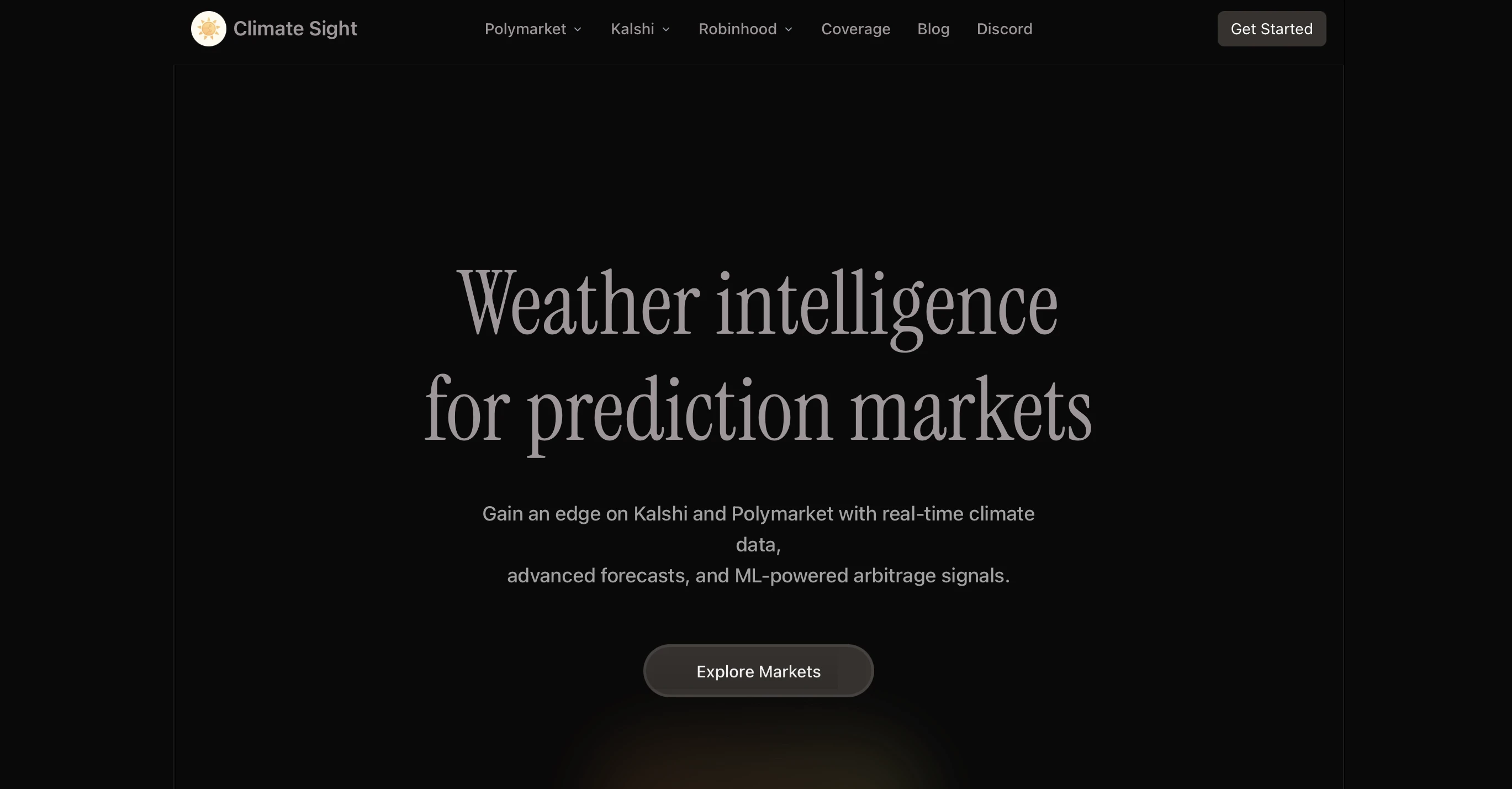
In data the crowd does not have open. Mention markets — "how many times will X say Y" — are priced by vibes and resolved by transcripts; a transcript index like SpeechTerminal turns that into counting. Weather markets are priced against forecast ensembles; Climate Sight and the weather bots in the catalog trade the gap between the model consensus and the price. These are research edges, and they decay slower than speed edges.
In breadth. An agent can watch two hundred markets and thirty sources at once. Its per-market judgement may be worse than a good human's; its coverage is better than any human's. Edges that are too small and too scattered for a person to bother with are an agent's natural habitat.
AI agents, and what the official framework gives you
Polymarket publishes Polymarket Agents, an MIT-licensed Python framework that wires together market data from the CLOB and Gamma APIs, news and web-search sourcing, retrieval over documents and an LLM, so an agent can research a market and place trades from the command line. It is scaffolding, and good scaffolding: the plumbing of the pipeline above, done once, with the official API clients. What it does not give you is an edge, a risk model, or any guarantee that the model's probability means anything.
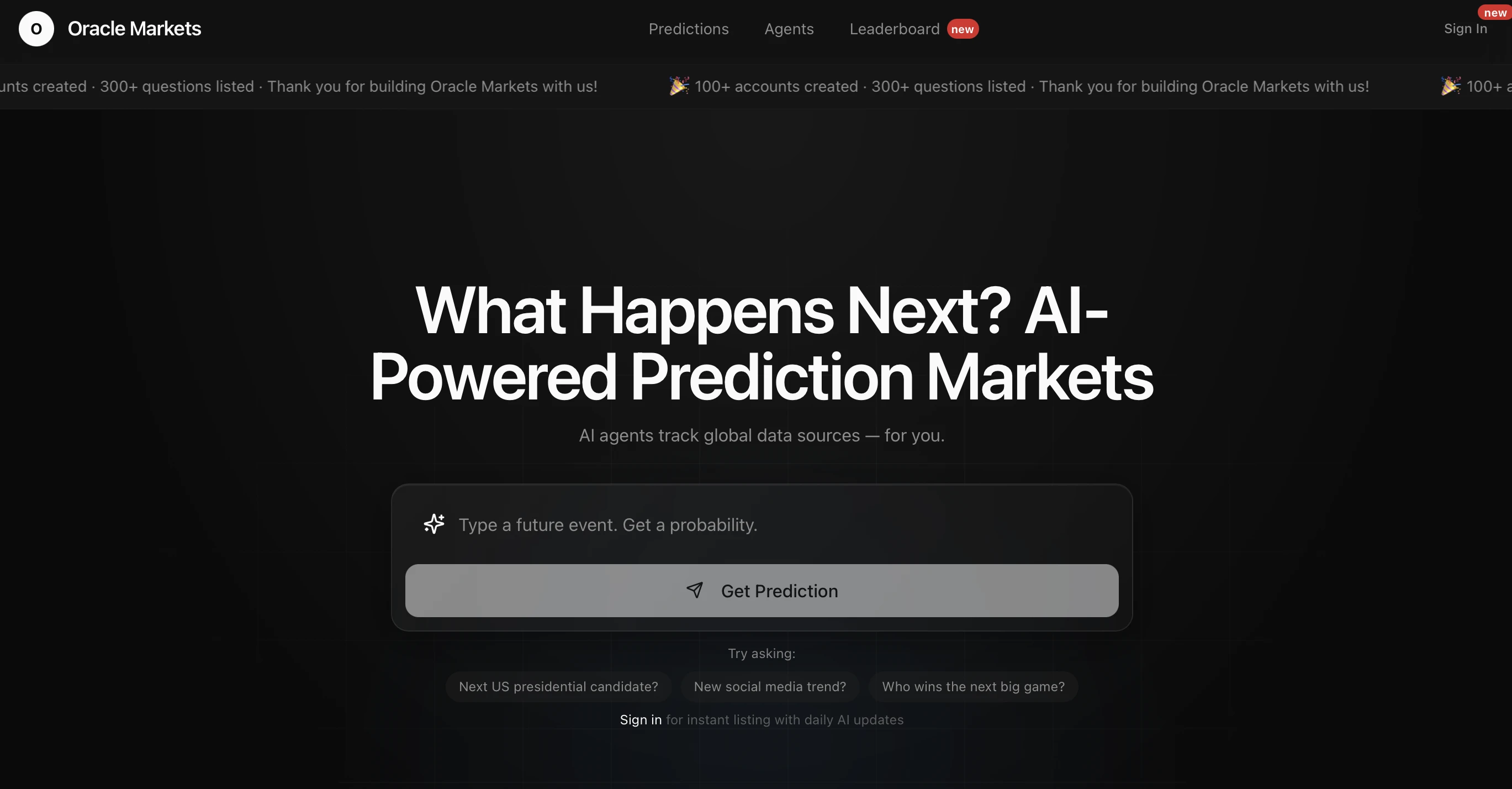
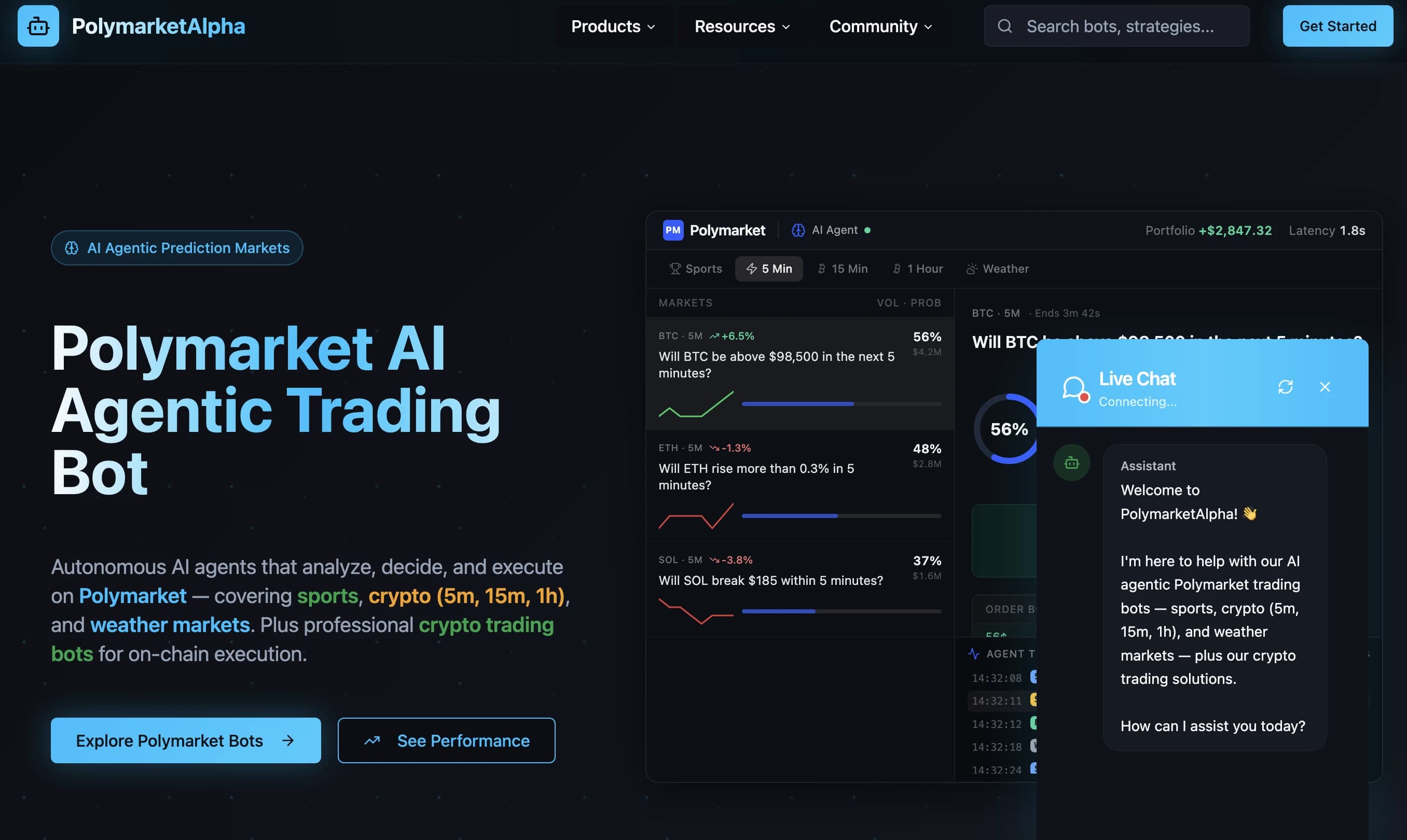
Commercial agent products build on the same idea with a product around it — Virae AI runs agents across several strategy types inside a terminal, PolymarketAlpha sells autonomous agents across sports, crypto and weather — and an open forecasting platform like Oracle Markets shows what calibrated multi-agent probabilities look like without trading them at all. Read each one's record the way you would any other: what did it publish, and can you check it?
Where these bots quietly lose
- Resolution risk. The headline was right and the market resolved the other way because the rule said a different source, a different deadline, a different threshold. Agents are especially prone to this: they read the question, not the rules.
- Stale sources. A feed that is thirty seconds behind X is thirty seconds behind the price.
- Overconfidence. An LLM will hand you "82%" with total composure. Calibration has to be measured, not assumed; a model that is right 60% of the time when it says 80% is a losing bot.
- Fees and the spread on taker orders. News bots cross the spread by design. A strategy that is mildly right loses to a spread that is mildly wide plus whatever fee the market carries.
- Crowding. The moment a source becomes popular — a particular account, a particular data release — the edge from reading it first is gone.
Tools in the catalog
Polymarket Agents
Official open-source framework from Polymarket for building AI agents that trade autonomously. Combines Polymarket & Gamma market data, news and web-search sourcing, and RAG-powered LLM tooling so an agent can research a market and place trades from the command line.
SpeechTerminal
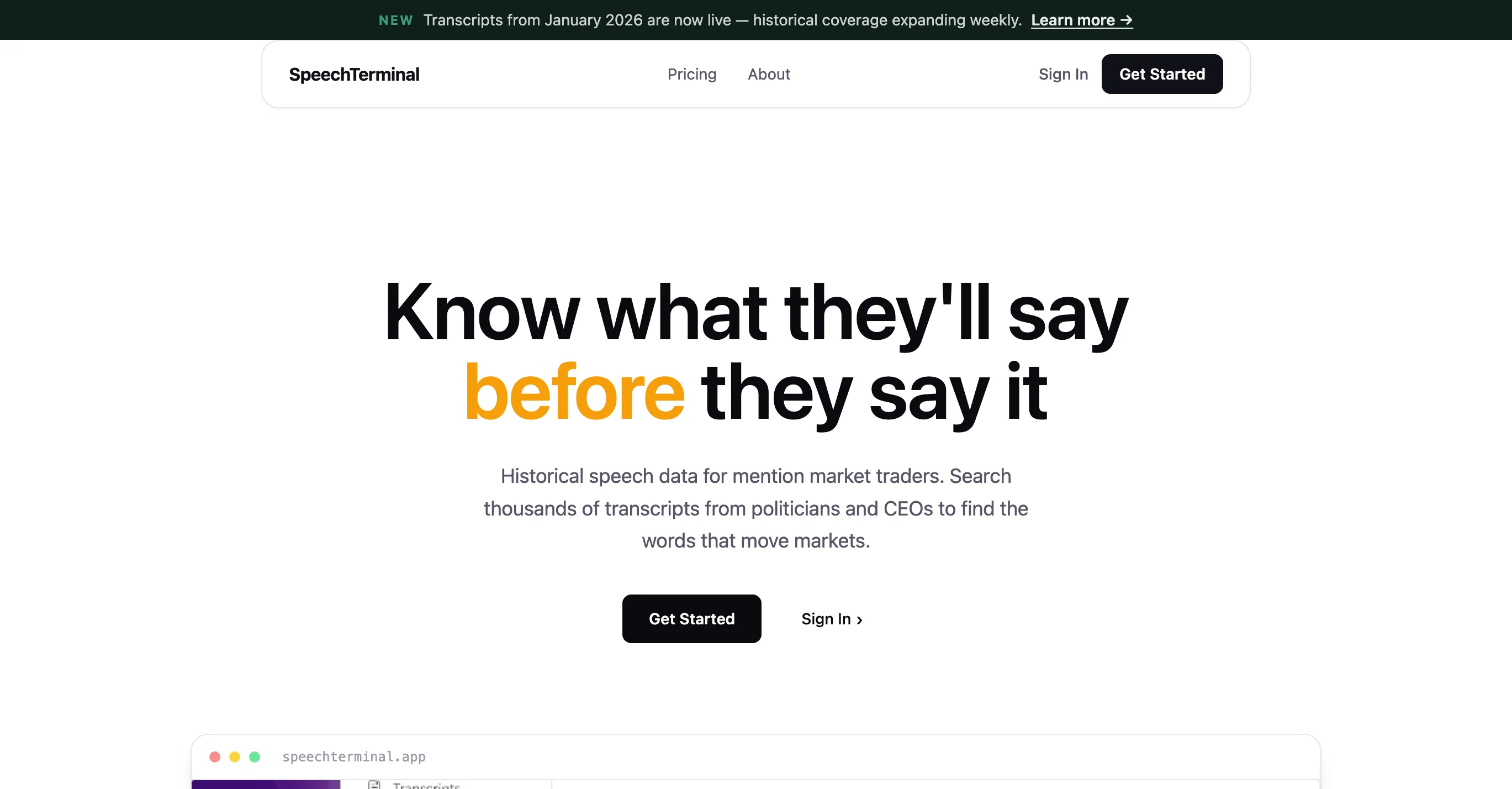
Transcript search built for mention markets — the ones asking how many times a speaker will say a given word. Search thousands of verified transcripts from politicians, Fed officials and CEOs, chart how often a phrase has been used over time, and read the surrounding context before pricing the next appearance. Covers Trump, Powell, Leavitt, Hegseth, Vance, Hassett and other figures plus corporate earnings calls, with an archive running from January 2026 forward and historical coverage still being backfilled.

DeepNewz
AI-powered real-time news platform. Summarizes breaking stories across politics, crypto and macro, tracks market-moving events and publishes AI-generated probability forecasts — a fast headline and sentiment feed for Polymarket traders.
Virae AI
AI trading terminal for Polymarket, in private beta: market discovery with live trending topics and order-book prices, a whale leaderboard ranking tracked wallets by PnL, volume, win rate and Sharpe with one-click copy tasks, and seven trading Agents across four strategy types — end-of-round BTC/ETH price-distance, pre-market maker ladders, weather-model probabilities and Musk tweet counts. Agents watch every eligible round and only place orders when sizing, liquidity and entry rules all pass; each ships with recorded paper performance clearly labelled as simulation, and the strategy-evaluation core is open source on GitHub. Turnkey-backed non-custodial wallets, web app plus Telegram bots, and a separate Solana memecoin terminal.
DeepNewz is the feed-side of this category — structured news built for prediction markets; the others above are the interpretation and execution sides. For building your own, the build guide covers the plumbing, and the backtesting guide covers the part that decides whether it was ever a strategy. POLBOTS does not verify any agent's performance, and nothing here is financial advice.
Frequently asked questions
- Can an AI agent trade Polymarket profitably?
- It can trade; whether it profits depends on whether its read of the world is better than the price, which already reflects thousands of people's reads. Agents shine at breadth — watching many markets and many sources at once — and at speed on well-defined events. They lose on markets where the hard part is interpreting the resolution rules, and on anything that rewards a source the agent does not have.
- What is Polymarket Agents?
- Polymarket's own open-source, MIT-licensed Python framework for building AI agents that research a market — market data, news, web search, retrieval over documents — and place trades from the command line. It is a starting point, not a strategy: you bring the model, the keys and the judgement.
- Is a news bot just a sniper with a feed?
- On binary events with an obvious resolution, nearly — the first fast order after the headline wins, and that is a latency game. Most of the value in this category is elsewhere: persistent mispricing of slow-moving events, mention markets where the data is a transcript, and weather markets priced off models. Those are research edges, not speed edges.
- How do I test a sentiment strategy before funding it?
- Replay. Collect the sources you would trade on with timestamps, the market prices at those times, and the eventual resolutions, then run the logic over the history and count what it would have done net of fees and slippage. Forward-test in paper mode for weeks before size. The backtesting guide covers where the data is and how replays lie.