On this page6 sections
What "hedging" means on a binary market
A Polymarket position is a claim on one outcome: YES pays a dollar if it happens, NO pays a dollar if it does not, and YES plus NO of the same market is always worth exactly one dollar at resolution. That identity is what makes hedging here simpler than in most markets — and what makes people confuse it with closing.
Three things get called hedging, and a bot that does any of them should know which:
- Flattening. Reducing or closing exposure to a market before it resolves, to lock a gain or cap a loss.
- Offsetting across markets. Holding positions in correlated markets so that a move in one is partly absorbed by the other.
- Offsetting across venues or assets. The same event on Kalshi or at a bookmaker; a crypto perp against a price-target market; a portfolio against an event risk.
Flattening: sell, or buy the other side and merge
You hold 1,000 YES bought at 0.40 and the market now trades 0.65. Two ways to lock it.
Sell. Hit the bid at 0.64, pay the spread you crossed and the taker fee on the fill (C × rate × p × (1 − p): about 0.9% of notional at 0.65 on a politics market, 1.6% on crypto). Simple, instant, and the book has to be deep enough to take your size.
Buy the other side and merge. Buy 1,000 NO at 0.35, then merge the YES/NO pairs back into 1,000 units of collateral — an on-chain operation the conditional-token contracts support and the relayer performs gaslessly for smart-wallet accounts. You paid 0.40 + 0.35 = 0.75 a pair and hold a dollar a pair: 0.25 locked, whatever resolves. The merge itself is free of trading fees; the NO purchase pays the fee and spread like any fill, and is often cheaper than selling YES into a thin bid. Market makers do this constantly — Poly-Maker ships position merging — because inventory that sits as matched pairs is capital doing nothing.
Which is cheaper depends on the two books. A bot that flattens should price both routes and take the one with the better net, which is a small, boring, useful piece of code.
Offsetting across correlated markets
A candidate market and the party market for the same race; a "BTC above X on date" and a 4-hour up/down book; a game winner and a series winner; an outcome and the "other" bucket of its negative-risk event. These move together without being identical, so one can partly hedge the other. Two things decide whether it is worth doing:
- The correlation is a guess until resolution, and it is weakest exactly when you need it — in the tails.
- Each leg pays its own fee and spread if you take. A two-leg hedge that costs 2–3% a round trip in fees needs the protection to be worth more than that, every time.
Where correlated hedging genuinely pays is when you are already a maker in one of the markets and the hedge is a resting order in the other: no fee, a rebate, and the correlation risk you would have carried anyway.
Offsetting across venues
Kalshi and bookmakers list many of the same events, and terminals like Infinity put Polymarket's book next to a perps venue so a price-target market and a perp can be traded against each other from one screen. Treat all of it as the arbitrage guide treats cross-venue arbitrage: the price gap is the easy part and the rulebooks are the risk. Two markets that look identical resolve on different sources, cutoffs and edge cases, and a position that is flat on price and not flat on rules is a bet you did not mean to make.
The tools that reshape exposure
The Hedging category is mostly not bots: it is tools that change what a Polymarket position *is*, and each adds a risk a plain hedge does not have.
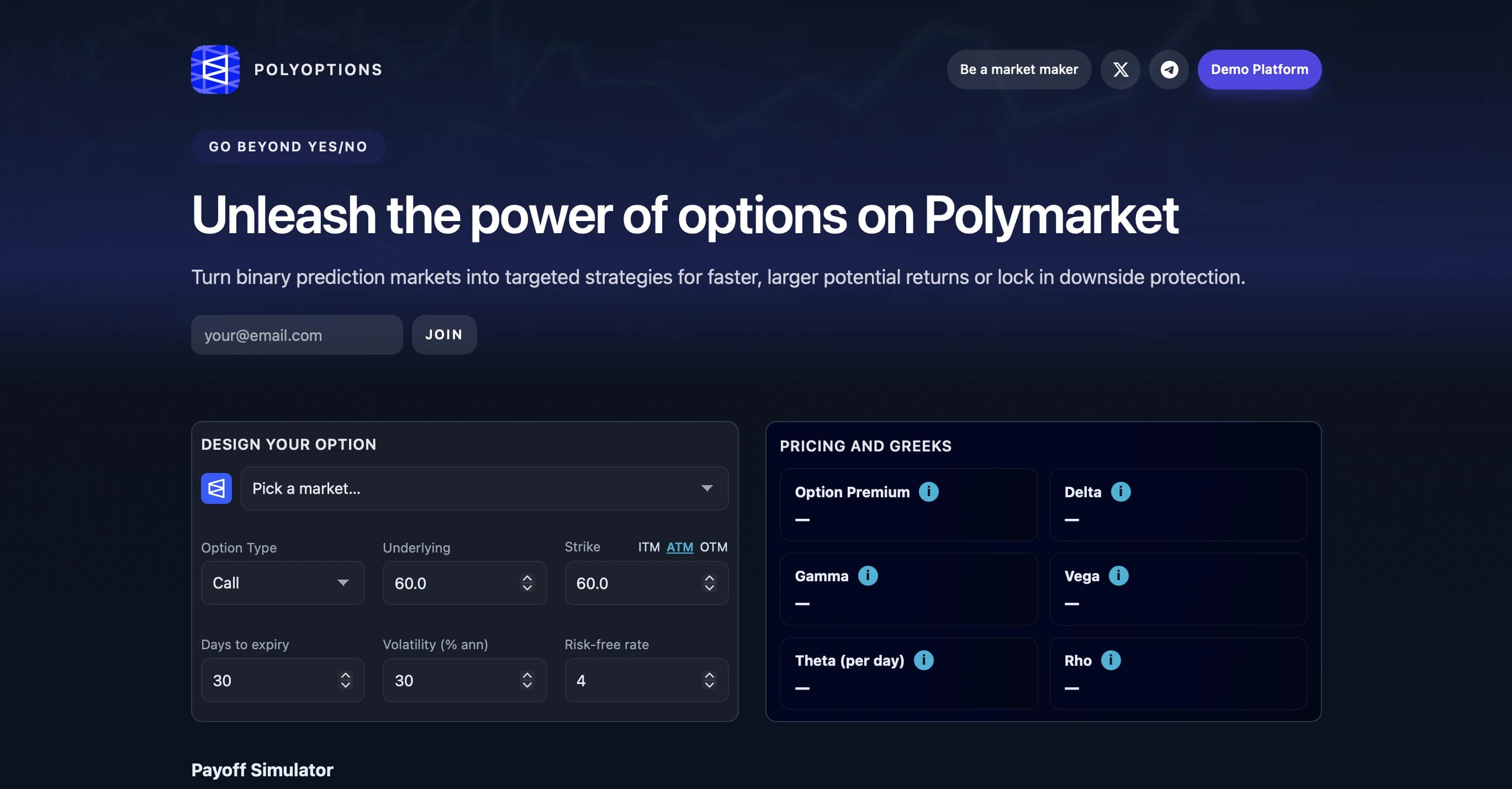
- **PolyOptions** turns binary markets into calls, puts, spreads, straddles and baskets with custom strikes and expiries, fully collateralised and without liquidation — the closest thing to a real hedging instrument on the platform, with the structure's own pricing to understand.
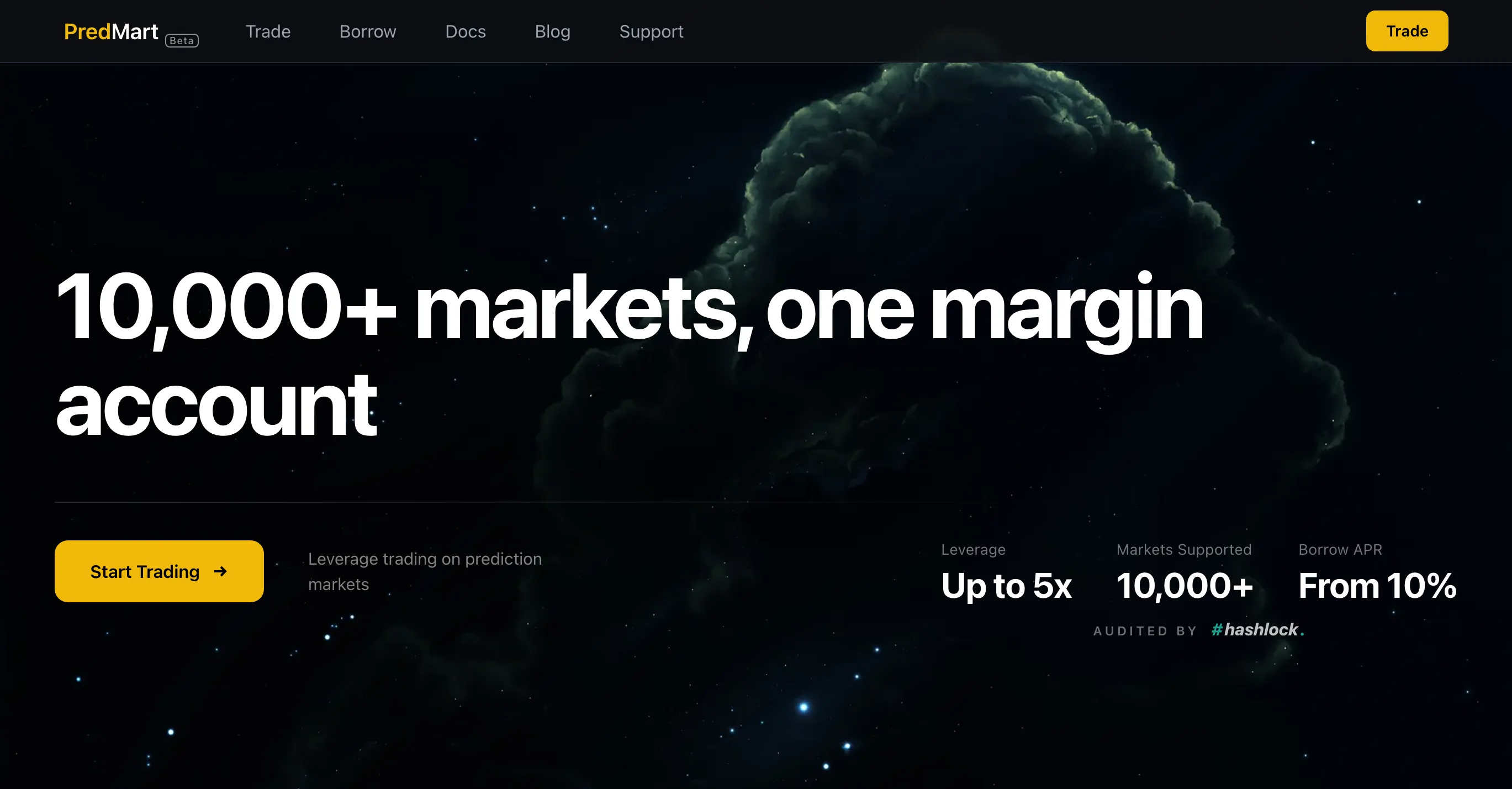
- **PredMart** is a margin account: up to 5× leverage on a position, or borrow against shares you hold. Leverage cuts both ways and a margin position can be liquidated; using it to hedge means adding a lender and a liquidation price to the trade.
- **Gondor** lends against positions and loops collateral for up to 2× — DeFi rails (built on Morpho) with DeFi risks: smart contracts, oracles, liquidation.
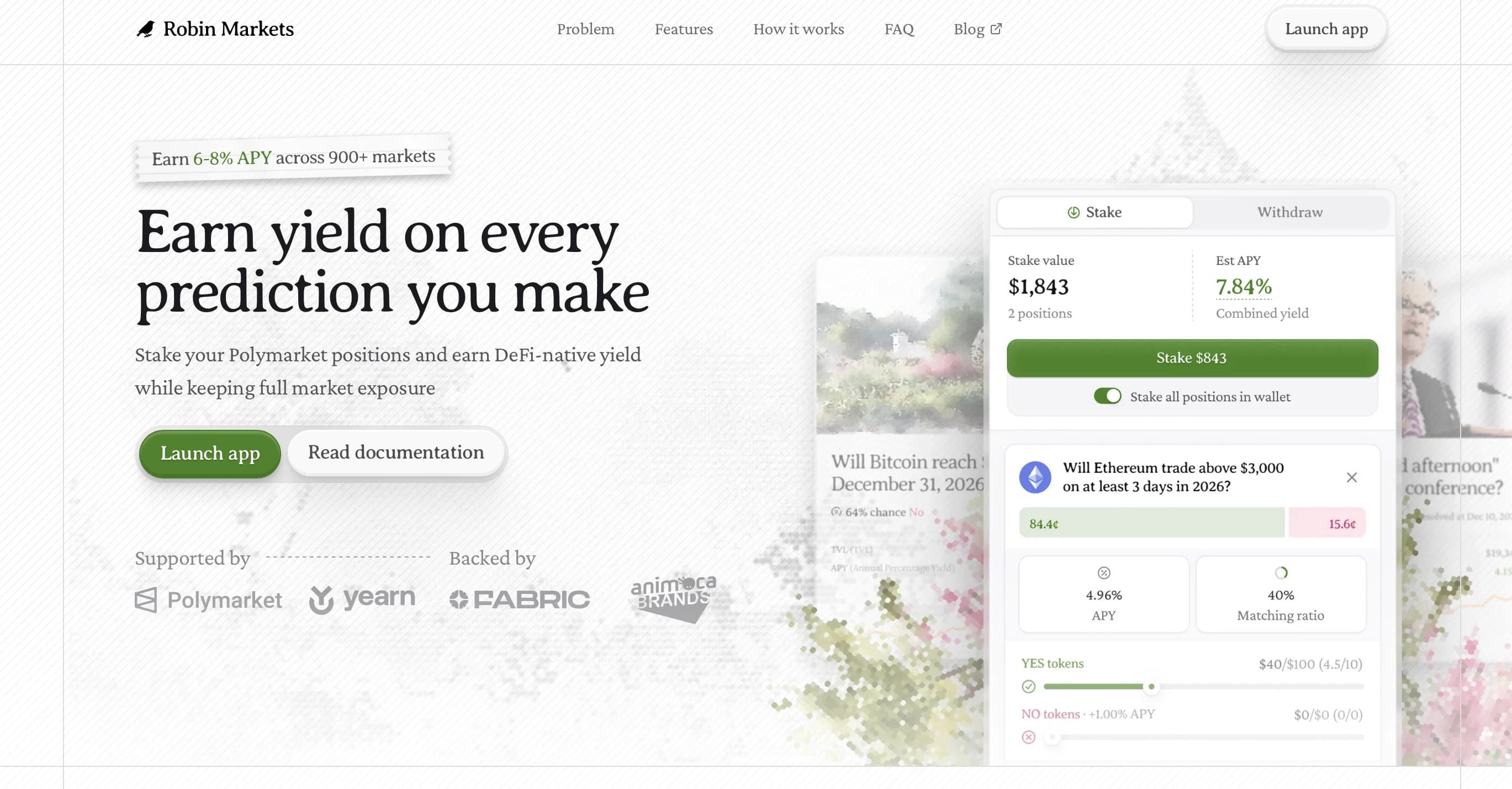
- **Robin Markets** pairs opposite sides into delta-neutral positions and pays yield on staked YES/NO — a way to earn on a flat book, with the counterparty risk of whoever is paying the yield.
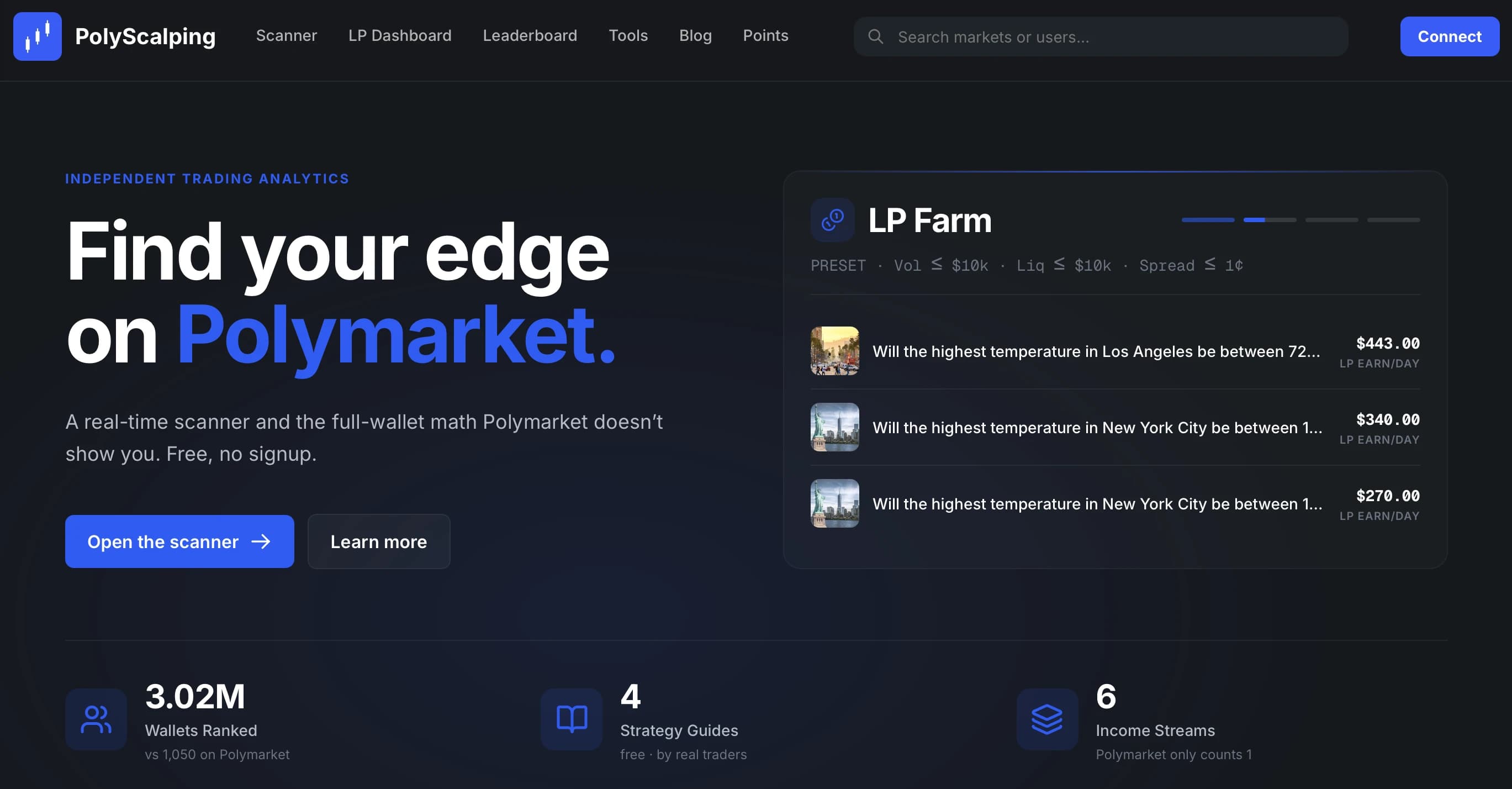
- **PolyScalping** is the dashboard for the maker side of all this: rewards, rebates and the full-wallet maths that decide whether a resting hedge pays.
None of these is a hedge by itself. They are ways to express one, and the expression costs borrowing, liquidation or counterparty risk that the plain version — sell, or buy-and-merge — does not.
A short checklist
- Decide whether you are closing, offsetting, or changing the position's shape; they cost different things.
- For a close, price both routes: sell into the bid, or buy the other side and merge.
- For an offset, know the correlation's failure mode and the two fees you pay for it.
- For anything cross-venue, read both rulebooks before you count it as flat.
- For leverage, options or yield tools, name the risk they add and check it is smaller than the one they remove.
Polyoptions
Options trading on top of Polymarket. Turns binary yes/no markets into calls, puts, spreads, straddles and basket structures with custom strikes and expiries — fully collateralized with no liquidation risk, manipulation-resistant settlement and auto-exercise for in-the-money contracts.
PredMart
Margin account for prediction markets. Open a position on any of 10,000+ markets with up to 5x leverage, or post prediction-market shares you already hold as collateral and borrow up to 80% of their value in USDC without selling them. USDC lenders supply the other side and earn the borrow interest. Non-custodial smart contracts on Base, audited by Hashlock, with no KYC and no account creation — you connect a wallet and trade. Still labelled beta.

Gondor
DeFi lending layer for Polymarket. Borrow up to 50% against your positions, supply USDC to curated funds for up to 30% APY, or loop collateral for up to 2x leverage in one transaction. Built on Morpho, non-custodial, currently fee-free. Backed by Prelude, Maven 11 and Castle Island.
Robin Markets
DeFi yield layer for Polymarket positions. Stake your YES/NO tokens and earn a guaranteed 6%+ APY while keeping full market exposure — Robin pairs opposite sides into delta-neutral positions, claims the collateral and routes USDC into DeFi lending across 900+ markets.
POLBOTS does not verify any of these tools' claims, and nothing here is financial advice — hedging is where people most often discover that a position they thought was flat was not.
Frequently asked questions
- How do I lock in a profit on a Polymarket position before it resolves?
- Two ways. Sell the shares into the book at the current price — simplest, pays the spread and the taker fee if you cross. Or buy the opposite outcome and merge the pair: a YES and a NO of the same market merge back into one unit of collateral on-chain, so holding YES bought at 0.40 and buying NO at 0.35 locks 0.25 a share regardless of the result, fee-free on the merge itself.
- Is buying both sides of a market a hedge?
- It is a closed position: YES plus NO of the same market is worth exactly one dollar at resolution. Whether it was a good trade depends on what you paid for the pair — below a dollar it is an arbitrage, above it a loss you chose to cap. A hedge proper is when the second leg is imperfectly correlated with the first, and that imperfection is the risk you keep.
- Can I hedge a Polymarket position on Kalshi or with a bookmaker?
- You can offset it; whether it is hedged depends on two rulebooks agreeing. Similar-looking markets on different venues name different sources, cutoffs and edge cases, and a cross-venue 'hedge' is a bet that both resolve the same way. Read both rules before you count it as flat.
- Do leverage and options tools make hedging safer?
- They make it more expressive, and they add exactly the risks a hedge is meant to remove: borrowing costs, liquidation on margin products, counterparty and smart-contract risk on anything DeFi. A structure that caps your loss on one market while putting your collateral at risk on another is not a hedge; it is a different position.