On this page7 sections
What the markets are
Polymarket's weather markets ask questions an instrument will answer: will the high temperature in a named city be above a threshold on a date, will it fall in a band, will it rain, will a storm make landfall. Each resolves against a named source — typically a specific weather station's reported reading, or an official agency's record — at a stated time, with a rule for rounding and for what happens if the source is late or corrected.
They are small markets with a large following among bots, for one reason: the thing being predicted has a professional forecasting industry behind it, and the people pricing the markets mostly do not use it.
Where the edge comes from
A retail trader prices "high above 90°F tomorrow" from a weather app's single number. A bot prices it from an ensemble: dozens of runs of several forecast models (the GFS and ECMWF families and their AI-model successors), each a plausible future, together a distribution of tomorrow's high. The fraction of members above the threshold is a probability — and when that probability is 0.80 and the market says 0.62, the gap is the trade.
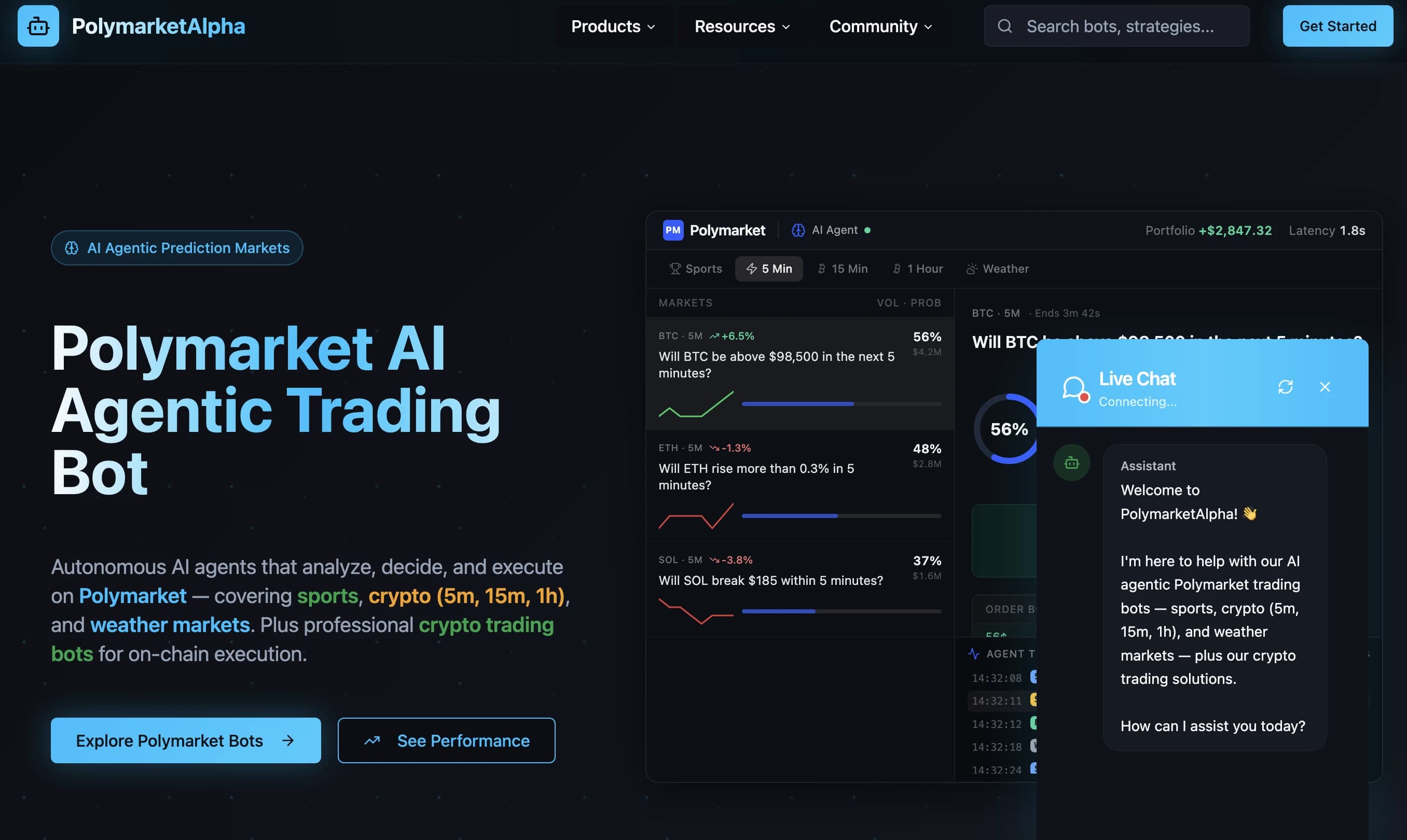
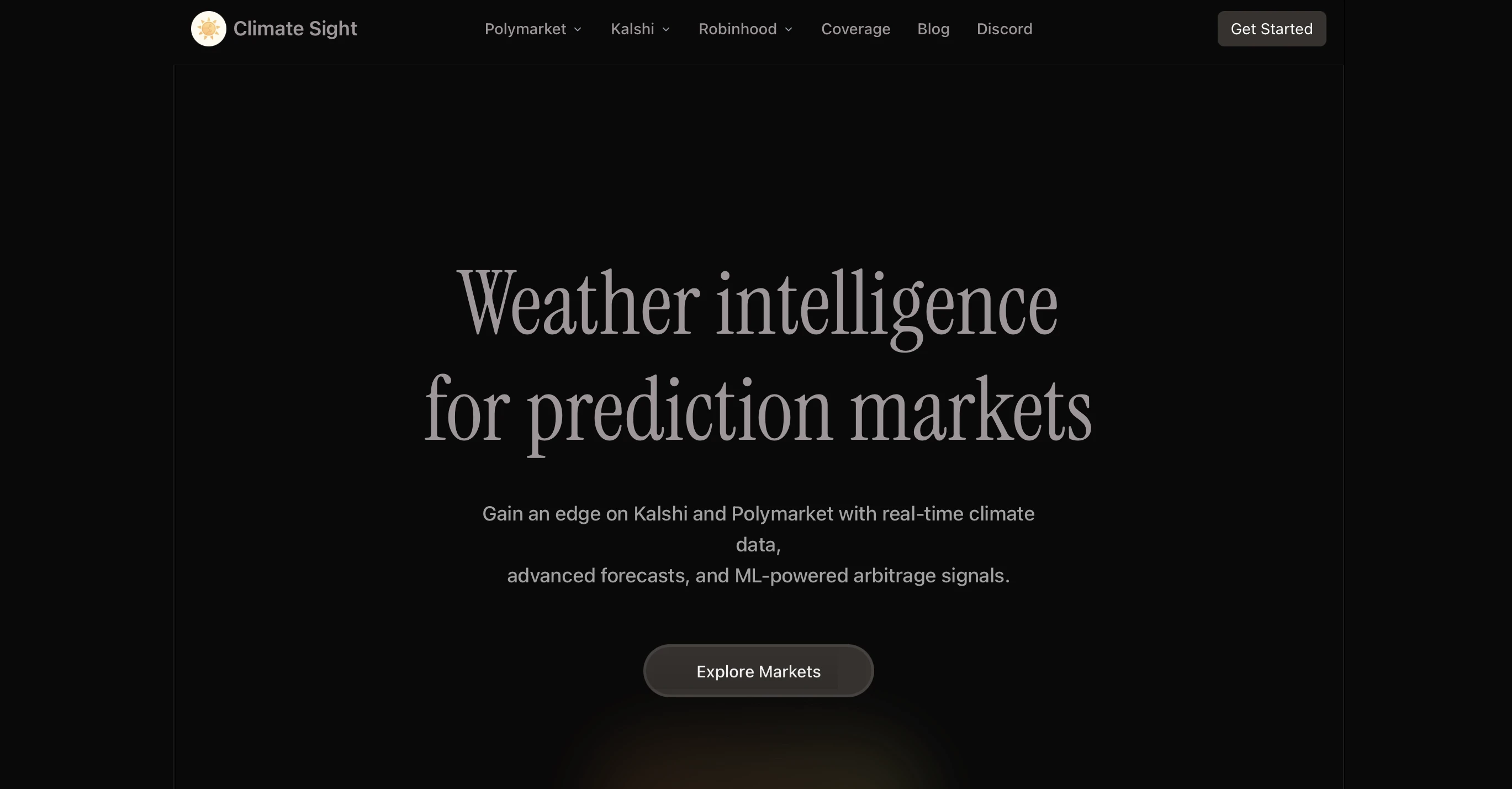
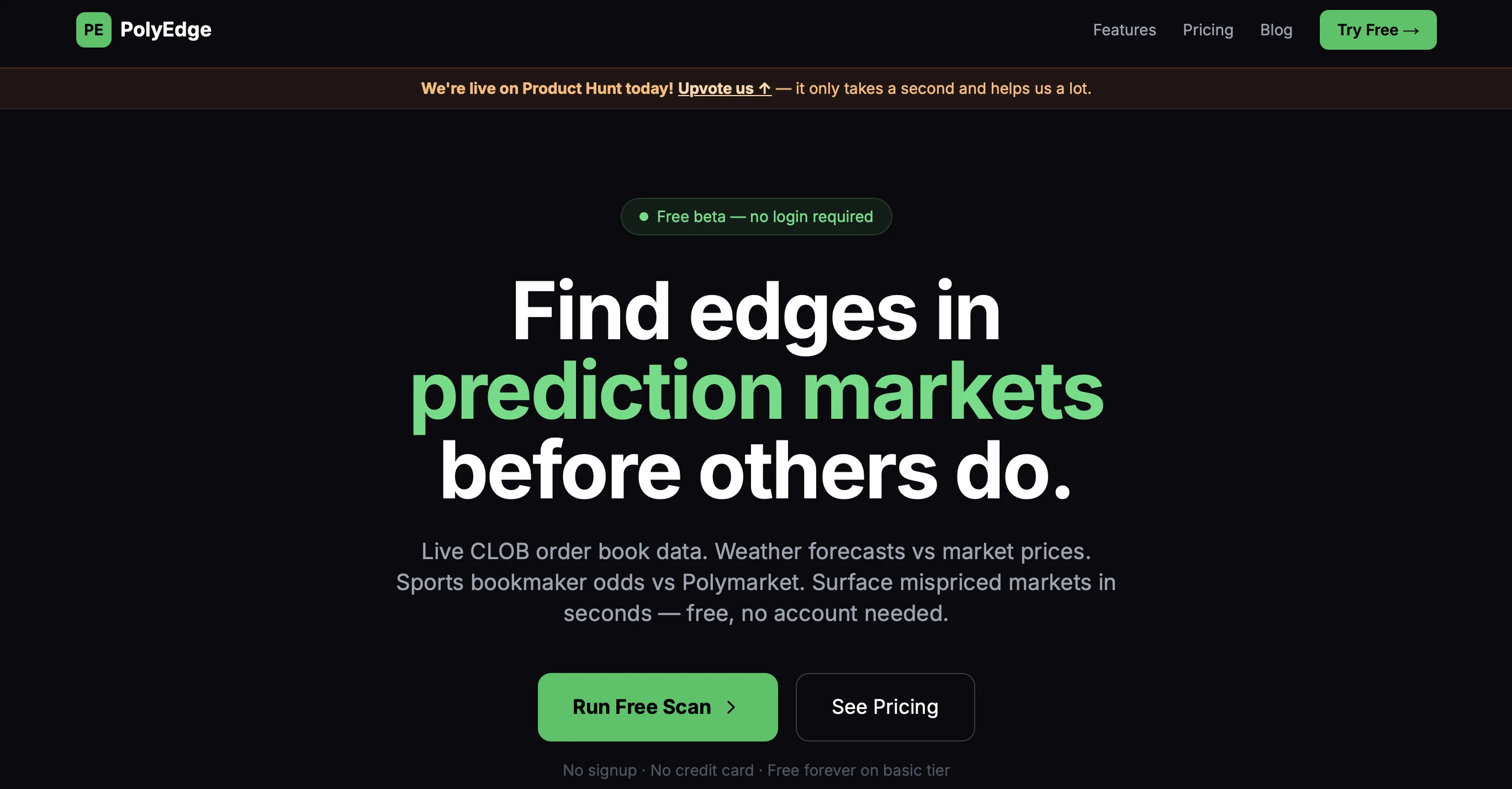
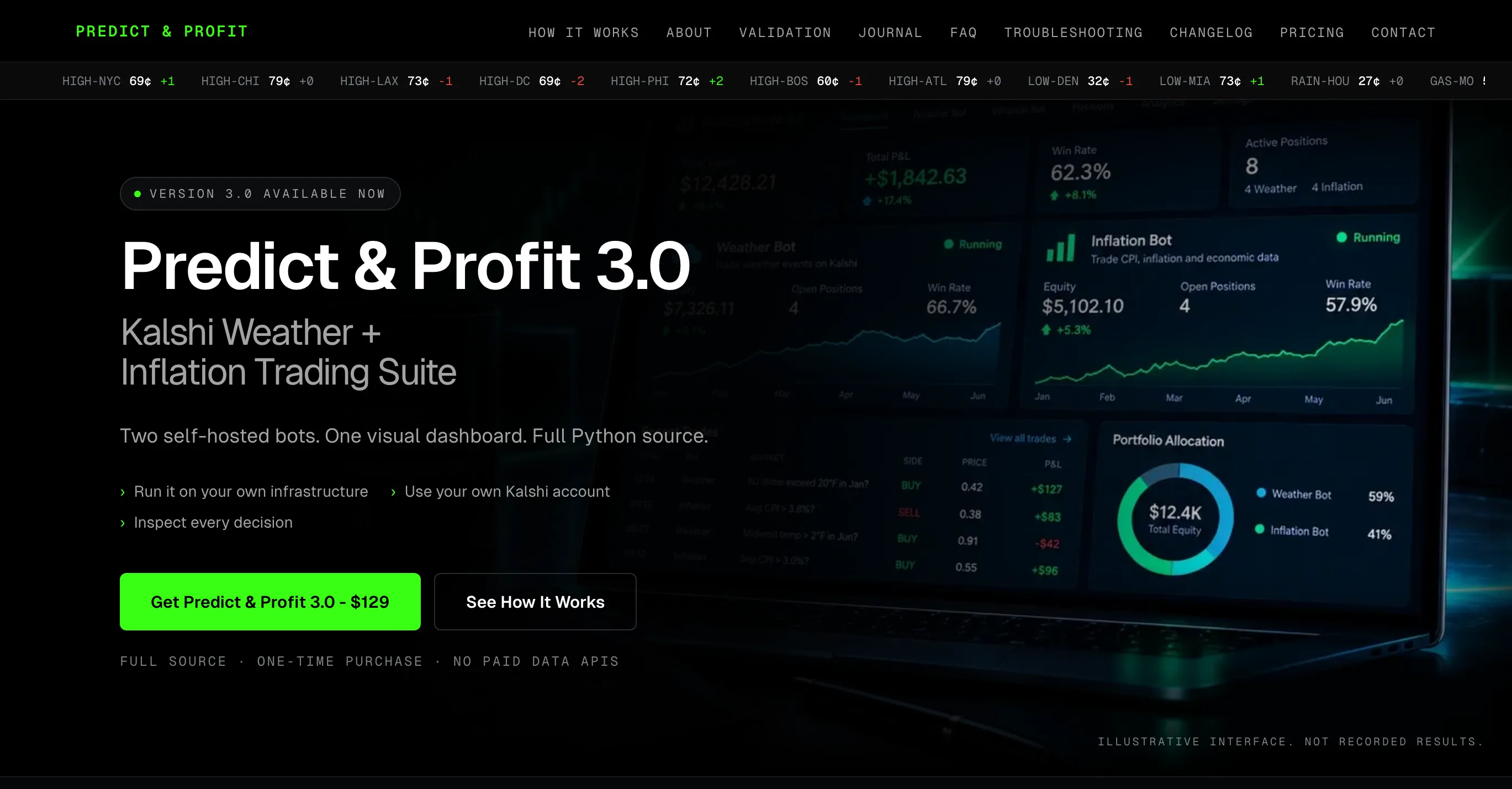
The catalog's clearest example publishes its method, and has already retired one: Predict & Profit traded when three of four raw ensemble families agreed, then dropped that rule after 112 settled trades scored a Brier of 0.2858 against 0.2439 for simply predicting the base rate — raw spread on overnight minima was 2 to 4 times too narrow and gridpoint bias reached 7°F. Version 3.0 prices instead from NOAA's calibrated National Blend of Models guidance for the exact station a contract settles on, across twenty US cities, keeps the five raw models at a quarter weight as a disagreement check, and declines any market NBM does not cover. Climate Sight aggregates NOAA, NWS and Synoptic feeds into forecasts for forty-plus cities with buy signals for the Polymarket side; PolyEdge's Weather Edge pits forecasts against order-book prices directly; Virae AI and PolymarketAlpha run weather-model agents among their strategies.
From forecast to order
- Pull the ensembles for the station the market names — not the city centre, not the airport the app defaults to. Station matters more than model.
- Compute the probability of the market's event from the member distribution, with the market's own rounding rule applied to each member.
- Compare to the book's mid and depth. Require agreement across model families; a split ensemble is a coin you are paying a fee to flip.
- Size to the book. Weather markets are thin; a bot that wants $500 of YES often is the offer.
- Rest or take. A resting order at your probability pays no fee and earns the maker rebate; taking pays 1.25% at the mid. Most weather edges are small enough that this choice decides whether there is one.
- Re-run as models update — ensembles refresh several times a day and the edge at 6 a.m. is gone by noon, or reversed.
The fee
Weather is a 0.05-rate category: the taker fee on C shares at price p is C × 0.05 × p × (1 − p) — 1.25% of notional at the mid, 1.05% at 0.70, 0.45% at 0.90 — and makers pay nothing. A five-cent model edge at the mid is a four-cent edge after taking and a five-cent edge after resting; on a thin daily market that difference is the strategy.
How the rule eats the edge
Weather bots lose most often while being right about the weather:
- Wrong station. The market resolves on one instrument; the model was read for another a few miles away. Microclimates are real and so are airport-versus-downtown gaps of several degrees.
- Rounding and bands. "Above 90" when the station reports whole degrees, or tenths, or rounds at report time — the rule says which, and a member at 89.6 is on one side or the other depending on it.
- Time zone and day boundary. Whose midnight, and whether the "daily high" is the calendar day or the observation day.
- Source corrections. Preliminary readings get revised; some rules resolve on the first report, some on the final.
- Late or missing data. What the rule does when the station is down.
- Disputes. The optimistic oracle can be asked to look again, and capital waits while it does.
Read the rule, encode it into the probability calculation, and keep a list of stations whose rules you have checked. The forecast is the easy half.
Capital, horizon, liquidity
Daily markets lock money for a day, which is kinder than an election; the constraint is liquidity, not duration. A handful of markets a day at a few hundred dollars each is the realistic scale for a single bot, which is why the serious ones cover many cities and several venues. Kalshi lists far more weather contracts than Polymarket, and several catalog tools trade or analyse both.
Tools in the catalog
Climate Sight
Weather analytics for climate prediction markets. Aggregates institutional feeds (NOAA, NWS, Synoptic) into professional forecasts across 40+ global cities, with ML-powered buy signals to flag high-probability trades on Kalshi, Polymarket and Robinhood.
PolyEdge
Scanner that finds mispriced Polymarket markets by comparing live order-book prices against objective data. Weather Edge pits meteorological forecasts against prices, Sports contrasts bookmaker odds, and you can upload your own probabilities for quarter-Kelly bet sizing with a 5% portfolio cap.
Predict & Profit
Self-hosted Python suite for Kalshi weather and inflation markets — two bots, a monitoring dashboard and one shared risk engine, installed and managed as a single system. Version 3.0 prices temperature contracts from NOAA's National Blend of Models, the calibrated station-level guidance published for exactly the stations Kalshi settles on, at 0.75 weight; GFS, AIGEFS, ECMWF IFS, AIFS and HRRR hold the remaining 0.25 as a disagreement check rather than as the model. Settlement stations come from Kalshi's own series metadata across 20 cities — Chicago settles on Midway, Houston on Hobby — and any market NBM does not cover is skipped, which rules out every same-day contract, because NBM coverage starts at forecast hour 24. The inflation half scores CPI, Core CPI and PCE against the Cleveland Fed's nowcast and an internal weighted one. Candidates then pass a four-signal gate — spread 30%, volume 20%, order-book imbalance 25%, model mispricing 25% — and the author says over 95% of scanned contracts are rejected. There is no public performance record: the trade log the earlier version published was retired with 3.0, and the site now publishes release and validation status instead of a P&L scoreboard.
Virae AI
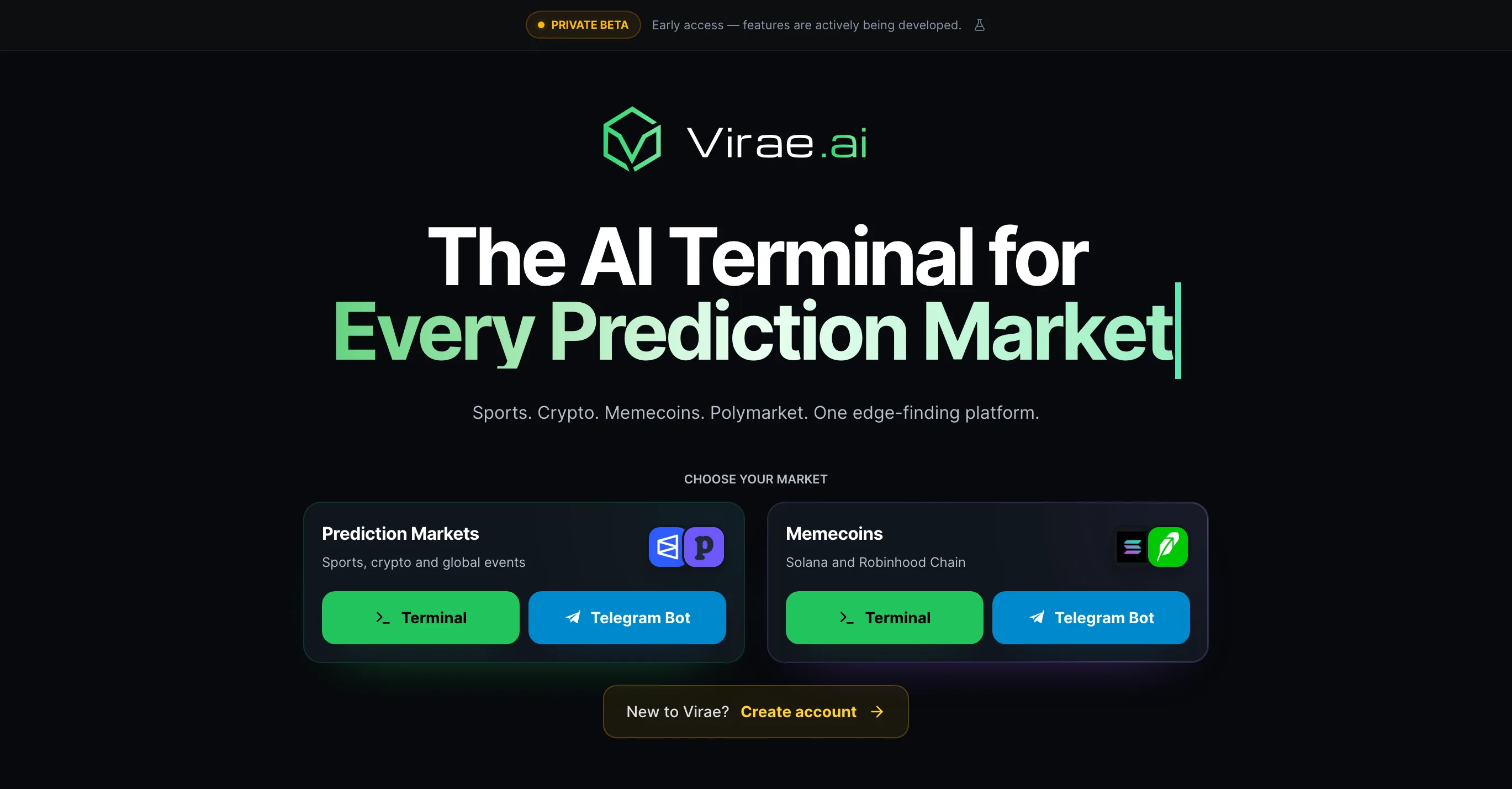
AI trading terminal for Polymarket, in private beta: market discovery with live trending topics and order-book prices, a whale leaderboard ranking tracked wallets by PnL, volume, win rate and Sharpe with one-click copy tasks, and seven trading Agents across four strategy types — end-of-round BTC/ETH price-distance, pre-market maker ladders, weather-model probabilities and Musk tweet counts. Agents watch every eligible round and only place orders when sizing, liquidity and entry rules all pass; each ships with recorded paper performance clearly labelled as simulation, and the strategy-evaluation core is open source on GitHub. Turnkey-backed non-custodial wallets, web app plus Telegram bots, and a separate Solana memecoin terminal.
The Weather Markets category lists everything we have reviewed. The backtesting guide is the right next read — weather is the rare Polymarket category where historical forecasts and historical resolutions are both available, so you can test honestly before you fund. POLBOTS verifies none of the performance claims above, and this is not financial advice.
Frequently asked questions
- Are weather markets easier than politics?
- They are more *modelable*: the thing being predicted is measured by instruments, and professional forecast ensembles exist for it. That does not make them easy — the crowd on short-dated weather markets is often sharper than it looks, liquidity is thin, and the resolution rule (which station, what rounding, which source) decides more trades than the forecast does.
- Which forecast should a bot use?
- Not one — several. The bots in the catalog that publish their method poll ensembles from multiple model families (GFS, ECMWF and their AI successors) and trade only when most of them agree on the side of the threshold. One model's point forecast is a guess with a decimal place; an ensemble gives you a distribution, and a distribution is a probability.
- How much can I make on a weather market?
- Small amounts, often. Markets are thin, edges are a few cents, the taker fee is 1.25% at the mid, and a daily market locks your capital for a day. It is a volume-and-discipline strategy, not a home-run one, and most of the published records in the catalog are on Kalshi's weather books rather than Polymarket's.
- Can I run a weather bot with no coding?
- Partly. Analytics platforms turn forecast feeds into buy signals you act on by hand, and agent products cover weather among their strategies; a fully automated forecast-to-order loop still means code or a bot sold with source. Start with the signal tools and see whether the edge survives your fills before you automate it.